If you’ve been dealing with hip pain, lower back discomfort, or that nagging tightness in the front of your hips, you’ve probably heard the same advice over and over: “Just stretch your hip flexors.” It seems like everyone from personal trainers to wellness blogs recommends hip flexor stretches as the cure-all for tight hips. But here’s something many people don’t realize—for some individuals, aggressively stretching hip flexors can actually worsen their pain rather than relieve it. Here in Dubuque, we see patients at Tri-States Chiropractic who’ve been diligently stretching for weeks or even months, only to feel more uncomfortable than when they started. In this article, we’ll explore why hip flexor stretching isn’t always the answer, what might really be causing your discomfort, and how to approach hip pain in a smarter, more effective way.
Why might stretching hip flexors make pain worse? When hip flexors feel tight, the issue is often not true muscle shortness but rather compensation for instability elsewhere in the body. Aggressively stretching an already overworked muscle can increase irritation, trigger protective tension, or mask underlying mobility restrictions in the pelvis, lower back, or thoracic spine.
Table of Contents
- Understanding Your Hip Flexors and What They Actually Do
- Why “Tight” Doesn’t Always Mean “Short”
- Common Causes of Hip Flexor Tension That Stretching Won’t Fix
- When Stretching Actually Makes Things Worse
- How Chiropractic Care Addresses the Real Problem
- Better Alternatives to Traditional Hip Flexor Stretching
- When to See a Chiropractor About Hip Pain
- Hip Flexor Myths vs. Reality
- Common Myths About Hip Flexors and Stretching
- Final Thoughts from Tri-States Chiropractic
Understanding Your Hip Flexors and What They Actually Do
Before we dive into why stretching might be problematic, it helps to understand what your hip flexors are and what role they play in your body. Your hip flexors are a group of muscles located at the front of your hip that allow you to lift your knee toward your chest and bend at the waist. The primary hip flexor is the iliopsoas, which is actually two muscles: the psoas major and the iliacus. Other muscles that assist with hip flexion include the rectus femoris (part of your quadriceps), the tensor fasciae latae, and the sartorius.
These muscles work every time you walk, run, climb stairs, or even sit down and stand up. They’re essential for everyday movement. When functioning properly, hip flexors coordinate with your glutes, hamstrings, and core muscles to create balanced, efficient movement patterns. The problem arises when this coordination breaks down.
In Dubuque and throughout the Tri-States area, we see many patients whose hip flexors are working overtime—not because they’re weak or short, but because other muscles aren’t pulling their weight. This constant overwork creates that familiar feeling of tightness that makes you want to stretch. But stretching an already overworked muscle is like asking an exhausted employee to work even harder.
Why “Tight” Doesn’t Always Mean “Short”
This is perhaps the most important concept to grasp when dealing with hip flexor discomfort. In musculoskeletal care, we distinguish between muscles that are actually shortened (structurally tight) and muscles that feel tight because they’re in a state of protective tension (neurologically tight).
True muscle shortness occurs when muscle fibers have actually adapted to a shortened position over time. This might happen if you spent years in a cast or were completely immobile for an extended period. But for most people, what feels like tightness is actually the nervous system creating tension to protect an area that lacks stability or proper movement control.
Think about it this way: if you had to hold a five-pound weight with your arm extended for several minutes, your arm muscles would start to feel tight and fatigued. But they’re not actually short—they’re just exhausted from constant work. Your hip flexors often experience this same phenomenon. They tighten up because they’re compensating for weak glutes, poor core stability, or restricted joint motion elsewhere in your body.
When muscles are neurologically tight from overwork, aggressive stretching sends confusing signals to your nervous system. Your brain perceives the stretch as a threat to stability, so it responds by creating even more tension. This is why some people stretch their hip flexors daily but never feel any lasting relief. They’re addressing the symptom rather than the underlying cause.
Common Causes of Hip Flexor Tension That Stretching Won’t Fix
At Tri-States Chiropractic, we regularly evaluate patients who’ve been dealing with persistent hip flexor tightness. Through careful assessment, we often discover that the hip flexors themselves aren’t the primary problem. Here are some common underlying causes:
Anterior Pelvic Tilt and Core Weakness
When your deep core muscles aren’t providing adequate spinal stability, your hip flexors pick up the slack. An anterior pelvic tilt—where your pelvis tips forward—places hip flexors in a mechanically disadvantaged position where they must work constantly just to maintain postural control. No amount of stretching will fix this until core stability is addressed.
Glute Inhibition and Weakness
Your glutes and hip flexors work as opposing muscle groups. When glutes are weak or inhibited (often from prolonged sitting), hip flexors must work harder during walking, standing, and movement. This creates chronic tension that feels like tightness but is actually overuse fatigue.
Lumbar Spine Restrictions
The psoas muscle attaches directly to your lumbar spine vertebrae. When joints in your lower back aren’t moving properly, the psoas often tightens as a protective response. Stretching won’t restore proper spinal joint motion—in fact, it might increase irritation by pulling on already restricted segments.
Hip Joint Mobility Issues
Sometimes the hip joint itself has restricted motion in certain directions. When this happens, surrounding muscles compensate by working harder. If your hip can’t extend properly (move backward), your hip flexors never get a chance to relax and lengthen naturally during normal walking. This is a joint problem, not a muscle length problem.
Sitting Posture and Prolonged Positioning
Many Dubuque residents work desk jobs that require hours of sitting daily. While sitting does place hip flexors in a shortened position, the bigger issue is often that sitting shuts down glute activity and creates overall movement pattern dysfunction. Simply stretching after sitting doesn’t retrain proper movement coordination.
When Stretching Actually Makes Things Worse
Understanding when and why hip flexor stretching can be counterproductive helps you make better decisions about your care. Here are specific scenarios where stretching might increase your discomfort:
Overstretching Already Lengthened Tissues
Believe it or not, some people’s hip flexors actually test long on functional assessment, even though they feel tight. This happens when anterior pelvic tilt or poor posture has placed the muscles in a chronically lengthened position. These muscles feel tight because they’re working hard to control the lengthened position. Stretching them further creates more instability and increases protective tension.
Irritating Inflamed or Injured Tissues
If you have an active hip flexor strain, tendinopathy, or iliopsoas bursitis, aggressive stretching introduces additional mechanical stress to already irritated tissues. This can prolong healing time and increase inflammation. Rest, gentle movement, and appropriate treatment are more beneficial during acute phases.
Increasing Joint Instability
Deep, prolonged stretching creates temporary increases in joint range of motion by affecting the nervous system’s stretch tolerance. However, if you’re not simultaneously building strength and motor control in that new range, you’ve essentially created more instability. Your nervous system will respond by tightening everything back up—sometimes even more than before.
Compensating for Restrictions Elsewhere
When thoracic spine mobility is limited or ankle dorsiflexion is restricted, your body finds movement somewhere else—often through excessive motion at the lumbar spine and hips. Stretching hip flexors in this scenario doesn’t address the real restriction. Your body needs that hip flexor tension to maintain stability around the areas that aren’t moving properly.
We see this pattern regularly at Tri-States Chiropractic. A patient comes in having stretched diligently for months without improvement. Upon examination, we discover their thoracic spine is extremely stiff, their hip joints have limited internal rotation, or they have significant foot and ankle dysfunction. Once we address these areas through chiropractic adjustments and appropriate exercises, the hip flexor tension often resolves without any direct stretching.
How Chiropractic Care Addresses the Real Problem
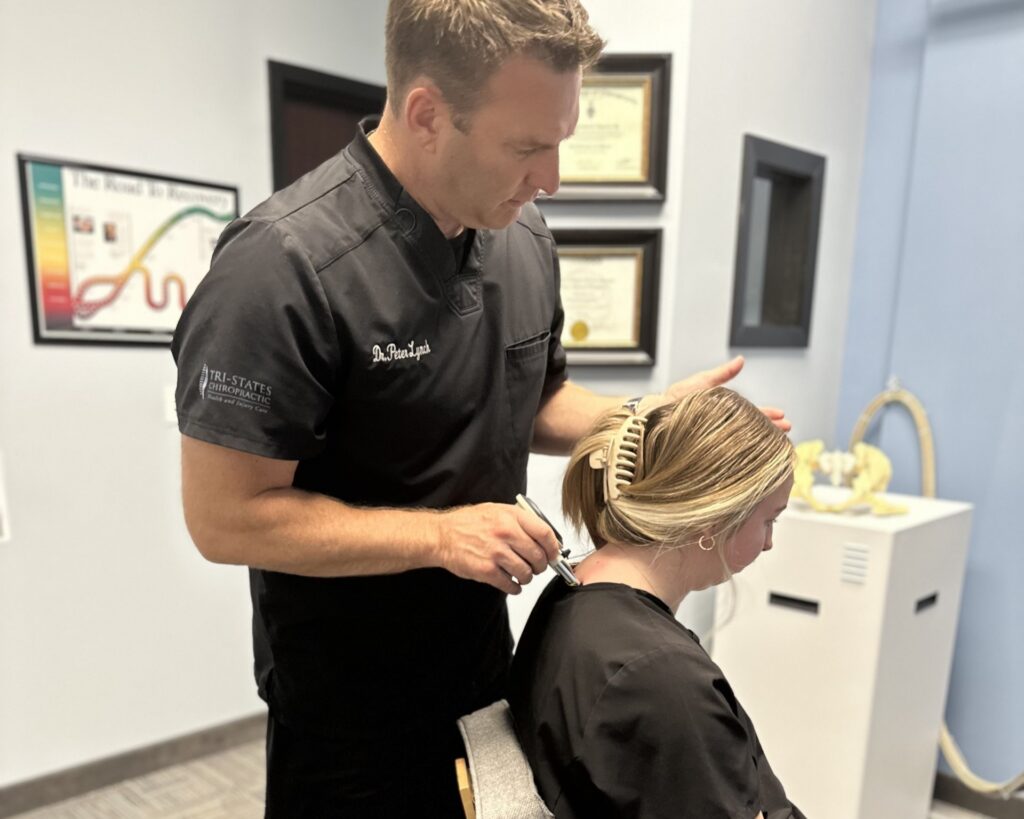
Chiropractic care takes a different approach to hip flexor tension by looking at the body as an integrated system rather than isolated parts. When you visit Tri-States Chiropractic in Dubuque with hip or hip flexor complaints, we conduct a thorough evaluation to identify the underlying cause of your symptoms.
Comprehensive Movement Assessment
We evaluate how your entire kinetic chain functions, not just your hips in isolation. This includes assessing your spine, pelvis, hips, and lower extremities to identify where movement restrictions exist and where compensations are occurring. We look at your walking pattern, how you move from sitting to standing, and how different joints coordinate during functional activities.
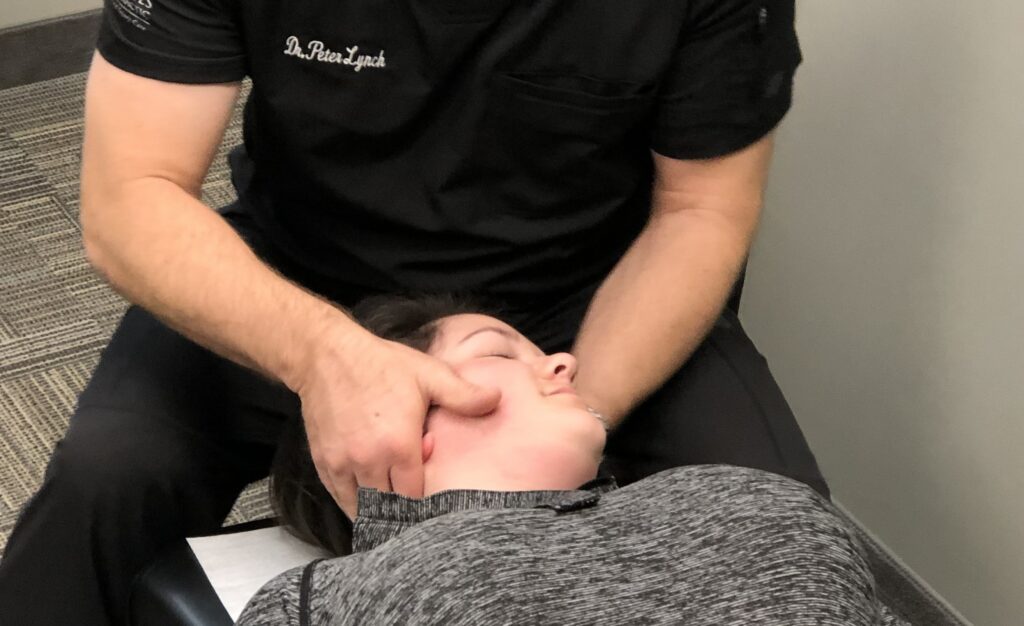
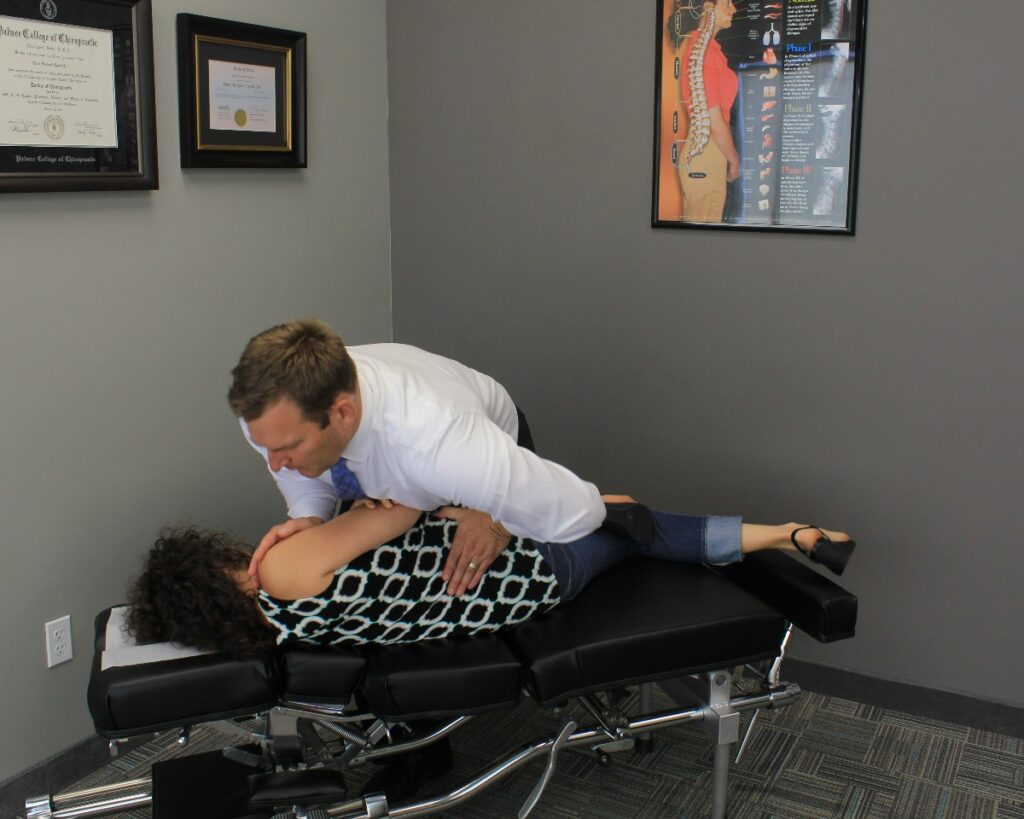
Spinal and Pelvic Adjustments
Chiropractic adjustments restore proper motion to restricted spinal segments and pelvic joints. When your lumbar spine and sacroiliac joints move properly, the psoas and other hip flexors no longer need to work as hard to stabilize these areas. Many patients experience immediate reduction in hip flexor tension following adjustments to restricted segments, even without any direct treatment to the hip flexors themselves.
Soft Tissue Techniques
While we’re cautious about aggressive stretching, targeted soft tissue work can be beneficial when applied correctly. We use techniques like instrument-assisted soft tissue mobilization, trigger point therapy, and myofascial release to address specific tissue restrictions and improve muscle function. These techniques are different from passive stretching—they’re applied with specific intent based on what we find during examination.
Corrective Exercise and Motor Control Training
Perhaps most importantly, we provide specific exercises designed to retrain proper movement patterns and build stability where it’s lacking. This might include glute activation exercises, core stability training, hip mobility drills, or coordination exercises. The goal is to reduce the demand on your hip flexors by improving how your entire movement system functions.
Evidence from organizations including the American Chiropractic Association suggests that multimodal care addressing joint function, muscle imbalances, and movement patterns produces better outcomes than single-intervention approaches for many musculoskeletal conditions. At Tri-States Chiropractic, we see this principle confirmed regularly in patient outcomes.
Better Alternatives to Traditional Hip Flexor Stretching
If aggressive hip flexor stretching isn’t the answer, what should you do instead? Here are evidence-informed approaches that address hip flexor tension more effectively:
Focus on Glute Activation
Strengthening and activating your glutes helps restore balance between your hip flexors and extensors. Simple exercises like glute bridges, clamshells, and hip thrusts can make a significant difference. The key is performing them with proper form and actually feeling your glutes working rather than letting your lower back or hamstrings compensate.
Improve Core Stability
Building true core stability—not just abdominal strength—reduces the stabilization demands on your hip flexors. Exercises like dead bugs, bird dogs, and pallof presses train your core to provide the stability your hip flexors have been compensating for. Start with controlled, quality movements rather than high repetitions.
Use Dynamic Movement Patterns
Instead of static stretching, use dynamic movements that take your hips through their full range of motion with control. Leg swings, walking lunges with rotation, and controlled hip circles train your nervous system to allow movement while maintaining stability. These patterns are more functional than holding a deep stretch.
Address Sitting Posture and Habits
If you sit for work, make changes to your sitting posture and take regular movement breaks. Set a timer to stand and walk every 30-45 minutes. When sitting, maintain a neutral pelvis rather than slouching into a posterior tilt. Consider a standing desk for part of your day. These environmental changes often provide more benefit than any stretching routine.
Incorporate Positional Breathing
Your breathing pattern and rib cage position directly affect hip flexor tension. Learning to breathe properly with your diaphragm while maintaining proper rib position can reduce unnecessary tension throughout your core and hips. This might sound unrelated, but the connection is significant and well-established in movement science.
Try Gentle Mobility Work Instead
Rather than aggressive stretching, gentle mobility exercises that explore your available range without forcing it can be beneficial. The 90/90 hip mobility drill, controlled hip CARs (controlled articular rotations), and gentle rocking patterns allow your nervous system to gradually accept more motion without triggering protective responses.
When to See a Chiropractor About Hip Pain
How do you know when it’s time to seek professional evaluation rather than continuing to self-treat? Here are indicators that chiropractic care may be appropriate:
If you’ve been stretching consistently for more than 2-3 weeks without improvement or if your symptoms are getting worse despite regular stretching, something else is likely going on. Your body is telling you that stretching isn’t addressing the real issue. This is a good time to get a professional assessment.
When hip flexor tightness or pain interferes with daily activities like walking, climbing stairs, or getting in and out of your car, professional care can help identify and address the underlying dysfunction. You shouldn’t have to modify your life around persistent hip discomfort.
If you experience pain with specific movements rather than just general tightness, this suggests a mechanical problem that needs specific intervention. Sharp pain with certain motions, clicking or catching sensations, or pain that shoots into your groin or thigh warrant professional evaluation.
When hip symptoms are accompanied by lower back pain, this often indicates that spinal dysfunction is contributing to your hip problems. Chiropractic care is particularly effective for addressing the spine-hip connection.
Red Flags Requiring Medical Evaluation
While most hip flexor issues are musculoskeletal in nature, certain symptoms require immediate medical attention. Seek emergency care if you experience severe pain following trauma, inability to bear weight on your leg, signs of infection like fever and warmth over the hip, or symptoms suggesting nerve damage like numbness, weakness, or loss of bowel or bladder control. These situations require medical evaluation before conservative care.
At Tri-States Chiropractic in Dubuque, we work collaboratively with other healthcare providers and will refer appropriately when symptoms fall outside our scope of practice or when additional evaluation is needed.
Hip Flexor Myths vs. Reality
| Common Approach | Why It May Not Work | Better Alternative |
|---|---|---|
| Daily aggressive hip flexor stretching | Addresses symptom (tightness) rather than cause; may increase protective tension | Assess and address underlying stability issues, glute weakness, or joint restrictions |
| Holding deep stretches for 60+ seconds | Creates temporary flexibility without motor control; nervous system may restore tension quickly | Dynamic mobility work with controlled movement through available range |
| Stretching immediately before activity | Can reduce force production and doesn’t prepare nervous system for movement | Dynamic warm-up with movement patterns specific to your activity |
| Focusing only on hip flexors | Ignores relationships with spine, core, glutes, and overall movement patterns | Comprehensive approach addressing entire kinetic chain and movement quality |
| Same routine for everyone | Different people have different underlying causes requiring individualized approaches | Professional assessment to identify your specific dysfunction and appropriate interventions |
Common Myths About Hip Flexors and Stretching
Myth: Sitting Makes Your Hip Flexors Permanently Short
Fact: While prolonged sitting places hip flexors in a shortened position, healthy muscle tissue doesn’t permanently shorten from positioning alone unless you’re immobilized for extended periods. The issue with sitting is more about reduced glute activity, poor movement variability, and overall postural dysfunction rather than actual structural muscle shortening. When you stand up and walk, your hip flexors lengthen again—they’re not “stuck” short.
Myth: If It Feels Tight, It Needs to Be Stretched
Fact: The sensation of tightness doesn’t necessarily indicate that a muscle is short or needs stretching. Tightness often represents protective tension from the nervous system in response to instability, weakness elsewhere, or joint restrictions. Addressing the underlying cause is more effective than stretching the tight area. This is why hamstrings can feel perpetually tight despite daily stretching—the tightness is often coming from poor spinal positioning or weak glutes, not short hamstrings.
Myth: More Stretching Equals More Flexibility
Fact: Beyond a certain point, more stretching doesn’t create more lasting flexibility and can potentially increase injury risk by creating instability. Functional flexibility comes from proper joint mechanics, adequate strength through full ranges of motion, and good motor control—not from aggressive, passive stretching. Research suggests that strength training through full range of motion can be as effective as stretching for improving flexibility.
Myth: Stretching Should Be Painful to Be Effective
Fact: Painful stretching triggers protective responses from your nervous system and can damage tissues. Effective mobility work should be challenging but not painful. The “no pain, no gain” mentality doesn’t apply to stretching. Working within comfortable ranges and gradually expanding them as your nervous system allows is far more effective than forcing painful positions.
Myth: Hip Flexor Problems Only Affect Athletes
Fact: Hip flexor dysfunction affects people of all activity levels, from sedentary office workers to active athletes. In fact, we see hip flexor issues just as commonly in people who sit all day as in those who train regularly. The underlying causes differ, but the symptoms can be similar. Anyone with a pelvis and hips can develop these problems, regardless of fitness level.
Final Thoughts from Tri-States Chiropractic
If you’ve been frustrated by persistent hip flexor tightness that doesn’t respond to stretching, you’re not alone, and there’s nothing wrong with you. The reality is that hip flexor tension is usually a symptom of dysfunction elsewhere in your movement system rather than the primary problem itself. By looking at your body as an integrated whole and addressing the real underlying causes—whether that’s spinal restrictions, weak glutes, poor core stability, or joint mobility issues—we can help you find lasting relief.
Here in Dubuque, the team at Tri-States Chiropractic takes the time to evaluate not just your symptoms but the underlying movement patterns and biomechanical factors contributing to your discomfort. We understand that every person’s body is different, and cookie-cutter stretching routines don’t address individual needs. If you’re tired of stretching without results, we invite you to experience a different approach—one that identifies and addresses what’s really causing your hip flexor tension.
Your body has an incredible ability to adapt and heal when given the right conditions and support. Sometimes that means doing less of what isn’t working—even if it’s commonly recommended advice—and more of what your specific body needs. Whether you’re dealing with hip pain, lower back discomfort, or just that nagging sense that something isn’t quite right with how your body moves, we’re here to help you figure it out and get back to moving and feeling your best.
Frequently Asked Questions
How long should I wait before getting help if stretching isn’t working?
If you’ve been consistently stretching for 2-3 weeks without noticeable improvement, or if your symptoms are worsening, it’s time to seek professional evaluation. Continuing the same approach that isn’t working will likely just delay your recovery. Early intervention often leads to faster resolution and prevents compensatory patterns from becoming more established.
Can weak hip flexors cause the same tightness sensation as overworked ones?
Yes, weak muscles often feel tight because they’re working at or near their maximum capacity even during normal activities. This is another reason why stretching doesn’t always help—the muscle doesn’t need to be lengthened, it needs to be strengthened. A proper assessment can determine whether weakness is contributing to your symptoms.
Is it ever appropriate to stretch hip flexors?
Gentle, controlled hip flexor mobility work can be appropriate in certain contexts, particularly when combined with strengthening and motor control exercises as part of a comprehensive program. The key is ensuring stretching is indicated for your specific situation rather than automatically assuming it’s needed. Your chiropractor can help determine what’s right for you.
How does chiropractic care differ from physical therapy for hip problems?
Both professions address musculoskeletal issues, but chiropractors specifically focus on spinal and joint function and how that affects overall movement and pain. Chiropractic adjustments can restore proper joint mechanics that other approaches may not directly address. Many conditions benefit from the joint-focused approach of chiropractic care, often in conjunction with the exercise and rehabilitation focus of physical therapy.
Can hip flexor issues cause pain in other areas?
Absolutely. Hip flexor dysfunction commonly contributes to lower back pain, groin discomfort, anterior knee pain, and even issues further up the chain like mid-back or neck tension. The body is interconnected, and problems in one area often create compensations and symptoms elsewhere. This is why addressing hip flexor issues often improves symptoms in multiple regions.
What’s the difference between hip flexor tightness and a hip flexor strain?
Tightness typically refers to increased muscle tension without tissue damage, while a strain involves actual injury to muscle fibers, ranging from microscopic tears to complete ruptures. Strains usually occur from a specific incident and involve acute pain, while tightness develops gradually from chronic patterns. Both require different management approaches, which is why proper diagnosis matters.
TL;DR – Key Takeaways
- Hip flexor tightness usually indicates overwork and compensation rather than actual muscle shortness, making aggressive stretching counterproductive for many people
- Common underlying causes include weak glutes, poor core stability, spinal restrictions, and hip joint mobility limitations—issues that stretching alone cannot address
- Chiropractic care identifies and treats the root cause of hip flexor tension through spinal adjustments, movement assessment, and corrective exercises rather than just addressing the tight sensation
- Better alternatives to passive stretching include glute strengthening, core stability work, dynamic mobility exercises, and addressing postural habits
- Seek professional evaluation if stretching hasn’t helped within 2-3 weeks, if symptoms are worsening, or if hip issues interfere with daily activities