Neck pain is one of the most common complaints we see here at Tri-States Chiropractic in Dubuque, IA. Whether it stems from long hours at a desk, poor sleeping positions, or the daily stresses of life, that persistent ache or stiffness can significantly impact your quality of life. The good news is that gentle, targeted exercises performed at home can make a meaningful difference in managing and preventing neck discomfort. As chiropractors who work with patients throughout the Dubuque area, we’ve seen firsthand how consistent movement and stretching can complement professional care and help people regain comfort and mobility. This article will guide you through safe, effective at-home exercises specifically designed to address neck pain, along with important information about when to seek professional evaluation.
What are at-home exercises for neck pain? At-home exercises for neck pain are gentle, therapeutic movements and stretches designed to improve neck mobility, strengthen supporting muscles, and reduce tension that contributes to discomfort. These exercises focus on restoring proper movement patterns and addressing muscular imbalances without requiring special equipment.
Table of Contents
- Understanding Neck Pain and Why Movement Matters
- The Benefits of At-Home Exercises for Neck Health
- Essential At-Home Exercises for Neck Pain Relief
- How Chiropractic Care Complements Home Exercise
- Important Guidelines for Safe Exercise
- When to See a Chiropractor for Neck Pain
- Myths vs. Facts About Neck Pain Exercises
- Final Thoughts
- Frequently Asked Questions
- TL;DR – Quick Takeaways
Understanding Neck Pain and Why Movement Matters
Your neck, or cervical spine, is a remarkably complex structure consisting of seven small vertebrae, numerous muscles, ligaments, and nerves all working together to support your head and allow for a wide range of motion. The average human head weighs about 10-12 pounds, and your neck muscles work constantly to balance this weight while you move throughout your day.
Neck pain can develop for many reasons. Poor posture while working at a computer, looking down at smartphones for extended periods, sleeping in awkward positions, or even carrying stress in your shoulders can all contribute to muscular tension and joint restriction. Many patients we see at Tri-States Chiropractic in Dubuque report that their neck pain started gradually, often without a specific injury or incident.
When neck muscles become tight or weakened, they can pull vertebrae out of their optimal alignment, create trigger points that refer pain to other areas, or limit your normal range of motion. This is where targeted movement becomes so valuable. Gentle exercises help restore mobility to stiff joints, improve blood flow to healing tissues, strengthen weakened muscles, and retrain proper movement patterns.
Research from organizations including the American Chiropractic Association suggests that active approaches to neck pain—including therapeutic exercises—can be more effective than passive treatments alone for many patients. Movement helps prevent the cycle of pain leading to immobility, which then leads to more stiffness and pain.
The Benefits of At-Home Exercises for Neck Health
Incorporating regular neck exercises into your daily routine offers numerous benefits beyond just temporary pain relief. Understanding these advantages can help motivate you to stay consistent with your home care routine.
First, exercises improve flexibility and range of motion. When you gently move your neck through its full range of motion regularly, you help maintain the health of the joints and prevent the stiffness that comes from prolonged static postures. This is particularly important for those who spend hours at desks or computers here in Dubuque.
Second, targeted exercises strengthen the muscles that support your cervical spine. Stronger neck and upper back muscles provide better support for your head, reducing the strain on individual structures and helping maintain proper alignment throughout the day. This muscular support system works hand-in-hand with the structural adjustments we provide at Tri-States Chiropractic.
Third, regular movement improves circulation to the neck region. Better blood flow means more oxygen and nutrients reaching the muscles and other tissues, which supports healing and reduces inflammation. This increased circulation also helps flush away metabolic waste products that can contribute to muscle soreness.
Additionally, exercises can help you become more aware of your posture and movement patterns. As you practice these movements, you’ll likely notice when you’re holding tension in your neck or sitting in positions that aggravate your symptoms. This body awareness is a powerful tool for preventing future episodes of neck pain.
Finally, having effective exercises you can do at home empowers you to take an active role in your own care. While professional chiropractic treatment is important for addressing underlying joint dysfunction and providing guidance, your home exercises help maintain and build upon the improvements gained from in-office care.
Essential At-Home Exercises for Neck Pain Relief
The following exercises are safe for most people experiencing mild to moderate neck discomfort. However, always listen to your body and stop any movement that causes sharp pain or significant discomfort. These exercises should create a gentle stretch or mild muscle engagement, never intense pain.
Chin Tucks
Chin tucks are one of the most fundamental exercises for addressing forward head posture, a common contributor to neck pain in our modern world. To perform a chin tuck, sit or stand with good posture. Gently draw your chin straight back, as if you’re trying to create a double chin, without tilting your head up or down. Hold for five seconds, then release. This movement strengthens the deep neck flexors and helps retrain proper head position. Aim for 10 repetitions, performed 2-3 times daily.
Neck Rotations
Gentle neck rotations help maintain mobility in the cervical spine. Sitting comfortably with shoulders relaxed, slowly turn your head to look over your right shoulder, moving only as far as comfortable. Hold for 3-5 seconds, return to center, then rotate to the left. The key is smooth, controlled movement without forcing the stretch. Perform 5-8 rotations to each side, once or twice daily.
Lateral Neck Flexion
This exercise stretches the muscles along the sides of your neck. Begin in a neutral position with shoulders relaxed. Slowly tilt your right ear toward your right shoulder, keeping your shoulders level and avoiding the temptation to lift your shoulder toward your ear. You should feel a gentle stretch along the left side of your neck. Hold for 15-20 seconds, return to center, then repeat on the opposite side. Perform 3-4 repetitions per side.
Shoulder Blade Squeezes
While technically targeting your upper back, this exercise is crucial for neck health because it addresses the postural muscles that support your cervical spine. Sit or stand with good posture. Squeeze your shoulder blades together as if you’re trying to hold a pencil between them. Hold for 5-6 seconds, then release. This strengthens the muscles that help prevent rounded shoulders and forward head posture. Perform 10-12 repetitions, 2-3 times daily.
Levator Scapulae Stretch
The levator scapulae muscle connects your neck to your shoulder blade and is a common source of neck and shoulder discomfort. To stretch it, sit comfortably and turn your head about 45 degrees toward the side you want to stretch. Gently tilt your chin down toward your armpit until you feel a stretch along the back and side of your neck. Hold for 20-30 seconds, breathing normally. Repeat 2-3 times per side.
The video above demonstrates several of these exercises with proper form. Visual demonstrations can be incredibly helpful when you’re first learning these movements, so consider watching it before beginning your exercise routine.
Upper Trapezius Stretch
The upper trapezius muscle often becomes tight and contributes to neck tension, especially in people who carry stress in their shoulders. To stretch this muscle, sit upright and place your right hand on the left side of your head. Very gently apply light pressure to tilt your head toward your right shoulder while keeping your left shoulder down. You should feel a stretch from your neck down toward your shoulder. Hold for 20-30 seconds and repeat on the other side. Never pull hard on your head—let the weight of your arm provide gentle assistance.
How Chiropractic Care Complements Home Exercise
At Tri-States Chiropractic, we view at-home exercises as an essential component of comprehensive neck pain management, but they work best when combined with professional chiropractic care. Here’s how these approaches complement each other.
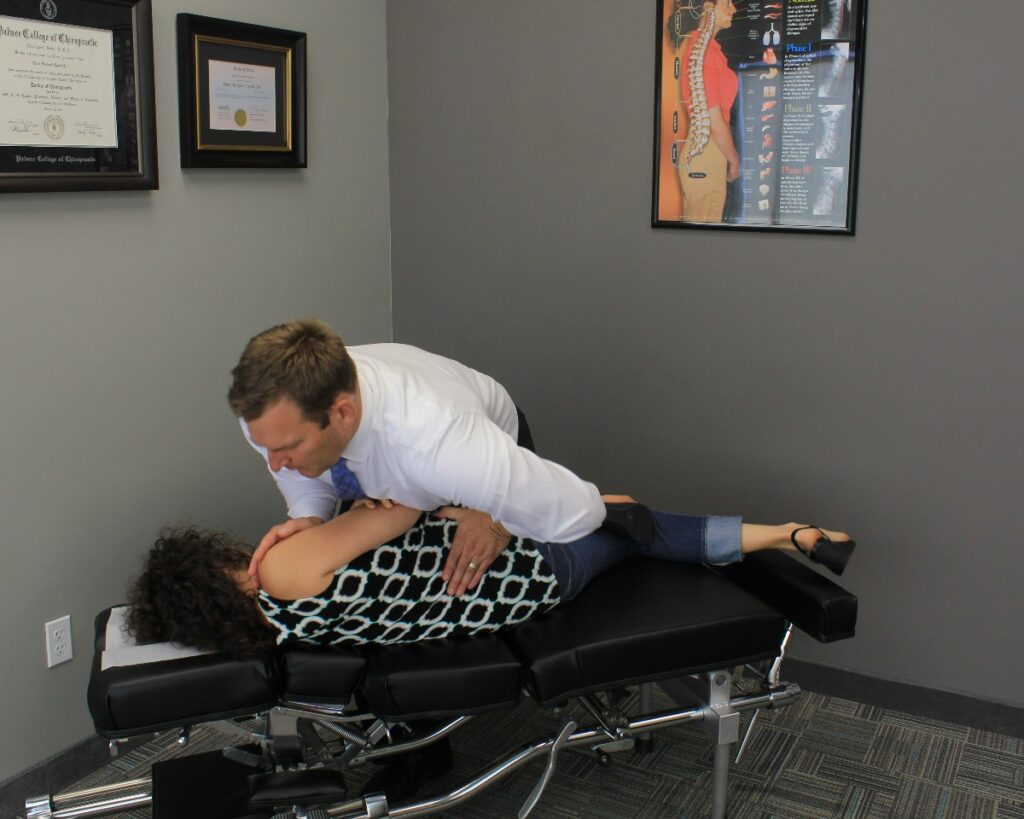
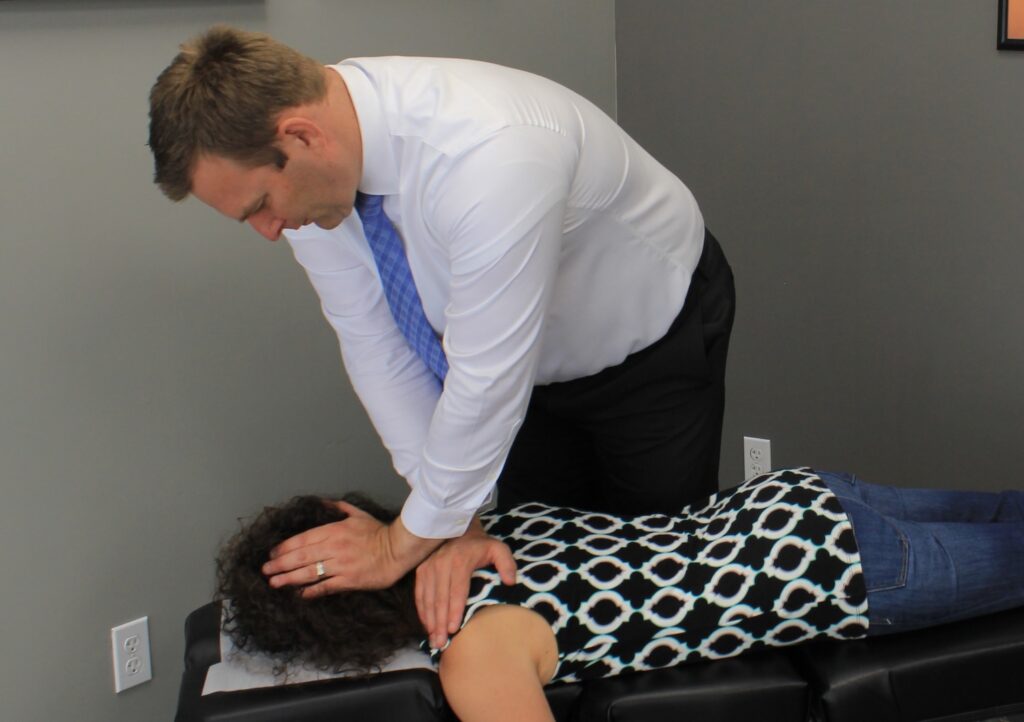
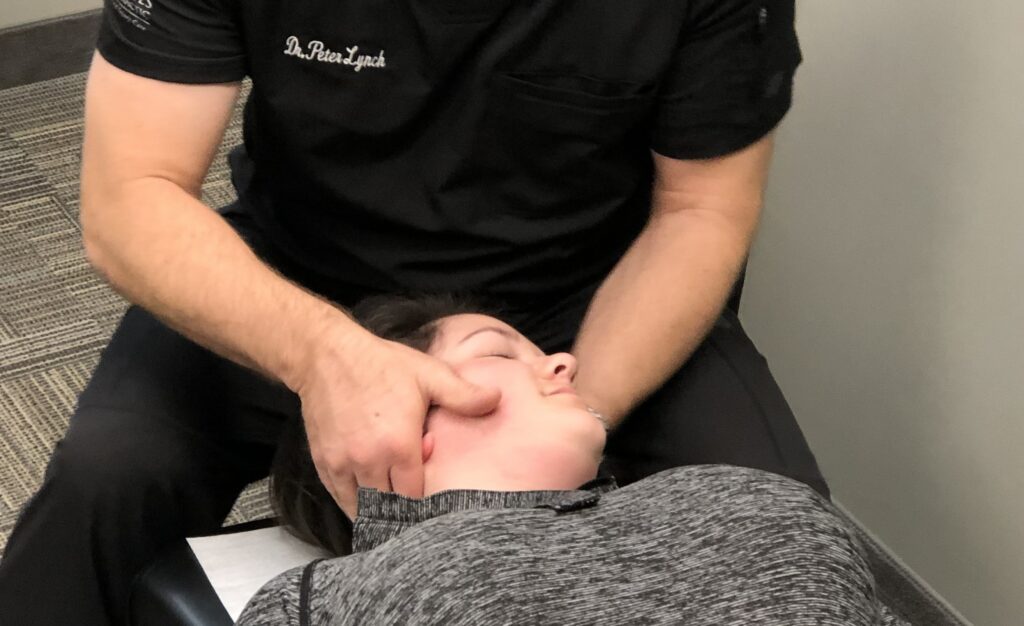
Chiropractic adjustments address joint restrictions and misalignments in your cervical spine that may be limiting your range of motion or contributing to muscle tension. When vertebrae aren’t moving properly, the surrounding muscles often compensate by tightening up, which can perpetuate the pain cycle. Adjustments help restore proper joint mechanics, which then allows your exercises to be more effective.
During your visits to our Dubuque office, we assess your specific movement patterns, identify areas of restriction or weakness, and can provide personalized exercise recommendations tailored to your unique situation. While the exercises outlined in this article are beneficial for many people, your individual needs may require modifications or additional movements.
We also provide guidance on proper exercise technique. Performing exercises incorrectly can sometimes aggravate symptoms rather than relieve them. Having a chiropractor demonstrate proper form and watch you perform the movements ensures you’re getting maximum benefit while minimizing risk.
Furthermore, chiropractic care addresses the underlying biomechanical issues that may have contributed to your neck pain in the first place. While exercises strengthen and stretch muscles, adjustments ensure the skeletal framework is properly aligned, creating an optimal foundation for muscular balance and function.
Many of our patients in Dubuque find that they progress more quickly when they combine regular chiropractic adjustments with consistent home exercises. The professional care addresses structural issues and provides relief, while the home exercises help maintain improvements, build strength, and prevent recurrence.
Important Guidelines for Safe Exercise
Following proper guidelines ensures your at-home exercise routine helps rather than hinders your recovery from neck pain. These principles are based on conservative care approaches we recommend at Tri-States Chiropractic.
Start slowly and build gradually. If you’re new to neck exercises or experiencing acute pain, begin with just a few repetitions of each movement and gradually increase as your comfort improves. There’s no need to rush—consistency matters more than intensity when it comes to therapeutic exercise.
Focus on quality over quantity. Performing five perfect repetitions is more beneficial than doing twenty sloppy ones. Pay attention to your form, move slowly and deliberately, and concentrate on the muscles you’re targeting.
Never push through sharp or severe pain. A gentle stretch sensation or mild muscle engagement is appropriate, but sharp, shooting, or severe pain is a signal to stop. If an exercise consistently causes pain, skip it and discuss it with your chiropractor at your next visit.
Breathe normally throughout all exercises. Many people unconsciously hold their breath during stretches or strengthening exercises, which increases tension. Maintain relaxed, normal breathing to help your muscles release and respond better to the movements.
Be consistent. Doing your exercises once and expecting dramatic improvement isn’t realistic. Most people see gradual improvements over days and weeks of regular practice. Set aside specific times each day for your exercises to help build the habit.
Warm up before exercising. Cold muscles don’t stretch as well and are more prone to strain. A simple warm-up might include gentle shoulder rolls, taking a warm shower, or applying a warm compress to your neck for a few minutes before beginning your exercise routine.
Maintain good posture during exercises. Many neck exercises are performed sitting or standing, and your posture during these movements matters. Sit or stand tall with shoulders back and down, avoiding slouching or excessive arching.
| Do This | Avoid This |
|---|---|
| Move slowly and smoothly | Jerky or rapid movements |
| Breathe normally throughout | Holding your breath |
| Stop if you feel sharp pain | Pushing through severe discomfort |
| Exercise daily for best results | Exercising sporadically |
| Maintain proper alignment | Slouching or poor posture |
| Start gently and progress gradually | Doing too much too soon |
When to See a Chiropractor for Neck Pain
While at-home exercises can be remarkably effective for managing mild to moderate neck discomfort, certain situations warrant professional evaluation and care. Knowing when to seek help ensures you receive appropriate treatment and avoid complications.
Consider scheduling an appointment at Tri-States Chiropractic if your neck pain persists beyond a week or two despite rest and home care efforts. While minor neck stiffness may resolve on its own, persistent pain often indicates an underlying issue that needs professional attention.
If your neck pain began after an injury—such as a car accident, fall, or sports collision—seek evaluation promptly. Even if the pain seems mild initially, trauma can cause injuries that benefit from early intervention. We see many motor vehicle accident cases here in Dubuque, and early chiropractic care can help prevent chronic problems from developing.
Pain that radiates down your arms, causes numbness or tingling in your hands or fingers, or is accompanied by weakness may indicate nerve involvement. These symptoms suggest that structures beyond just muscle tension may be affected, and professional assessment is important.
Severe pain that significantly limits your ability to turn your head, look up or down, or perform daily activities should be evaluated. While some discomfort during movement is common with neck pain, severe restriction often requires professional care to restore proper function.
Neck pain accompanied by headaches, especially if the headaches are new or changing in pattern, warrants evaluation. Many headaches originate from cervical spine dysfunction, and addressing the neck issue can often provide relief from the head pain.
Additionally, seek immediate medical attention if you experience neck pain along with fever, unexplained weight loss, loss of bladder or bowel control, difficulty walking or maintaining balance, or if the pain followed significant trauma. These red flags may indicate serious conditions requiring urgent medical evaluation beyond the scope of chiropractic care.
Even if your neck pain doesn’t fall into these categories, many people find value in professional evaluation. At Tri-States Chiropractic, we can identify contributing factors you might not recognize on your own, provide targeted treatment to accelerate healing, and give you personalized exercise recommendations that address your specific needs.
Myths vs. Facts About Neck Pain Exercises
Myth: Cracking your own neck is just as good as a chiropractic adjustment
Fact: Self-manipulation of the neck can be risky and is not the same as a professional chiropractic adjustment. When chiropractors perform adjustments, we apply specific, controlled force to particular vertebrae that aren’t moving properly. Self-manipulation often moves segments that are already too mobile while failing to address restricted areas. This can destabilize your neck and potentially worsen problems. At Tri-States Chiropractic, we use precise techniques based on examination findings to ensure safe, effective treatment.
Myth: You should rest completely and avoid moving your neck when it hurts
Fact: While brief rest may be appropriate for acute, severe pain, prolonged immobility usually makes neck pain worse rather than better. Gentle movement and exercise help maintain mobility, prevent stiffness, improve circulation, and support healing. Evidence from organizations like the American College of Physicians indicates that staying active is generally more beneficial than extended rest for musculoskeletal pain. The key is finding the right balance—gentle, appropriate movement rather than complete rest or aggressive activity.
Myth: Neck exercises will cure all types of neck pain
Fact: Exercises are a valuable tool for managing many types of neck pain, but they aren’t a cure-all. Some conditions require additional treatments such as chiropractic adjustments, modifications to ergonomics or daily habits, or addressing systemic health factors. Exercises work best as part of a comprehensive approach to neck health. We often tell patients at our Dubuque office that exercises are like brushing your teeth—essential for maintenance and prevention, but sometimes professional care is still needed.
Myth: More exercise is always better
Fact: When it comes to therapeutic neck exercises, more isn’t necessarily better. Overdoing exercises can actually aggravate symptoms, cause muscle fatigue, or lead to inflammation. Following recommended repetitions and frequencies allows your body to adapt and strengthen without overwhelming tissues that may already be irritated. Quality and consistency matter more than quantity.
Myth: Neck pain exercises should hurt to be effective
Fact: The old saying “no pain, no gain” does not apply to therapeutic neck exercises. These movements should create a gentle stretch sensation or mild muscle engagement, but never sharp or severe pain. Pain is your body’s warning signal that something is wrong. If exercises consistently hurt, the movement may be inappropriate for your current condition, or you may need to adjust your technique. Always work within comfortable ranges and consult with your chiropractor if exercises cause pain.
Final Thoughts
Neck pain doesn’t have to control your life. The at-home exercises outlined in this article offer a practical, accessible way to take an active role in managing your neck health and complementing professional care. Here at Tri-States Chiropractic in Dubuque, IA, we’ve seen countless patients make significant improvements by combining regular chiropractic adjustments with consistent home exercise routines.
Remember that everyone’s neck pain is unique, influenced by different factors including posture, work demands, stress levels, previous injuries, and overall health. What works well for one person may need modification for another. That’s why we encourage Dubuque residents experiencing neck discomfort to seek personalized evaluation and guidance rather than relying solely on generic advice.
The exercises we’ve discussed—including chin tucks, gentle rotations, stretches, and strengthening movements—are generally safe and effective for most people. However, they’re most powerful when incorporated into a broader approach to neck health that includes proper ergonomics, stress management, adequate sleep on a supportive pillow, and regular professional care when needed.
If you’re dealing with persistent neck pain or want guidance on the best exercises for your specific situation, we’re here to help. Our team at Tri-States Chiropractic understands the unique needs of patients throughout the Dubuque area, and we’re committed to providing evidence-based, conservative care that helps you feel and function at your best. Your journey toward a healthier, more comfortable neck begins with that first small step—whether it’s starting these exercises today or scheduling an evaluation with our office.
Frequently Asked Questions
How often should I do neck exercises for pain relief?
For most people, performing neck exercises once or twice daily provides the best results. Consistency is more important than duration—even just 5-10 minutes of focused exercise daily is more beneficial than longer, sporadic sessions. Some gentle stretches can even be performed multiple times throughout the day, especially if you work at a desk.
Can I do these exercises if I have arthritis in my neck?
Gentle range-of-motion exercises can actually be beneficial for cervical arthritis, helping maintain mobility and reduce stiffness. However, if you have diagnosed arthritis or suspect you might, it’s important to have your exercise routine reviewed by a healthcare provider to ensure the movements are appropriate for your specific condition and don’t aggravate inflammation.
How long before I notice improvement from neck exercises?
Many people notice some improvement in flexibility and comfort within a few days to a week of consistent exercise, though significant changes typically develop over several weeks. If you’ve been experiencing neck pain for months or years, realistic expectations are important—improvement may be gradual. If you’re not seeing any progress after 2-3 weeks of consistent effort, professional evaluation can help identify what else might be needed.
Is it normal to feel sore after doing neck exercises?
Mild muscle soreness, similar to what you might feel after other types of exercise, can be normal when you first start neck exercises or increase intensity. This soreness should be mild and resolve within a day or two. Sharp pain, severe soreness, or symptoms that worsen significantly are not normal and suggest you should modify or stop the exercises and consult with a chiropractor.
Can poor sleeping positions cause neck pain even if I exercise regularly?
Absolutely. You spend roughly one-third of your life sleeping, so sleeping position and pillow support have a major impact on neck health. Even the best exercise routine can’t fully compensate for eight hours of poor neck positioning every night. Using a pillow that supports the natural curve of your neck and sleeping on your back or side (rather than your stomach) typically provides better support.
Should I exercise my neck when it’s in acute pain?
During acute, severe neck pain, very gentle range-of-motion exercises may be appropriate, but aggressive stretching or strengthening should wait until the acute phase passes. The goal during acute pain is usually gentle movement to prevent stiffness without aggravating inflamed tissues. Professional guidance from a chiropractor can help you determine what’s appropriate for your specific situation and ensure you’re not making things worse.
TL;DR – Quick Takeaways
- At-home neck exercises including chin tucks, gentle rotations, stretches, and strengthening movements can significantly help manage and prevent neck pain when performed consistently and correctly.
- Exercises work best when combined with professional chiropractic care, which addresses underlying joint dysfunction and provides personalized guidance for your specific situation.
- Always move slowly and gently, never pushing through sharp or severe pain—therapeutic exercises should create mild stretch or muscle engagement, not intense discomfort.
- Consistency matters more than intensity; performing exercises daily for just 5-10 minutes is more beneficial than sporadic longer sessions.
- Seek professional evaluation at Tri-States Chiropractic in Dubuque if pain persists beyond a couple weeks, follows an injury, radiates into your arms, or significantly limits your daily activities.