Headaches are one of the most common complaints we hear about here at Tri-States Chiropractic in Dubuque, IA. Whether it's a dull, persistent ache that shows up every afternoon or a debilitating migraine that keeps you in bed with the curtains drawn, chronic headaches can seriously affect your quality of life. The good news is that many headaches — including migraines — have identifiable, treatable causes. And understanding those causes is the first step toward finding real, lasting relief.
What are chronic headaches and migraines?
Chronic headaches are generally defined as headaches occurring 15 or more days per month for at least three months. Migraines are a specific type of headache disorder characterized by moderate to severe throbbing pain, often on one side of the head, and frequently accompanied by nausea, light sensitivity, or visual disturbances. Both conditions can significantly disrupt daily life — and both often have root causes that respond well to conservative, non-invasive care.
What Causes Chronic Headaches?
Chronic headaches rarely come from just one place. In most cases, they're the result of several overlapping factors — physical, environmental, and lifestyle-related. Understanding which factors are driving your headaches is key to addressing them effectively rather than just masking the pain with medication.
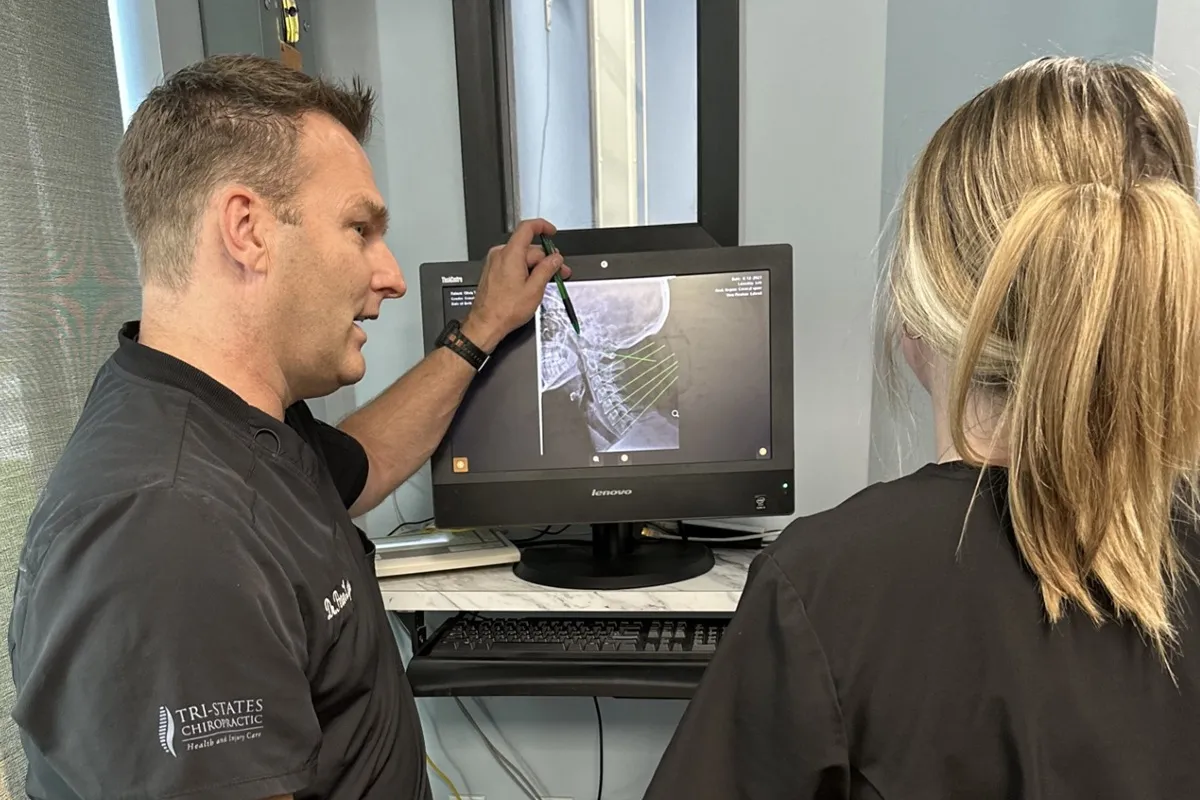
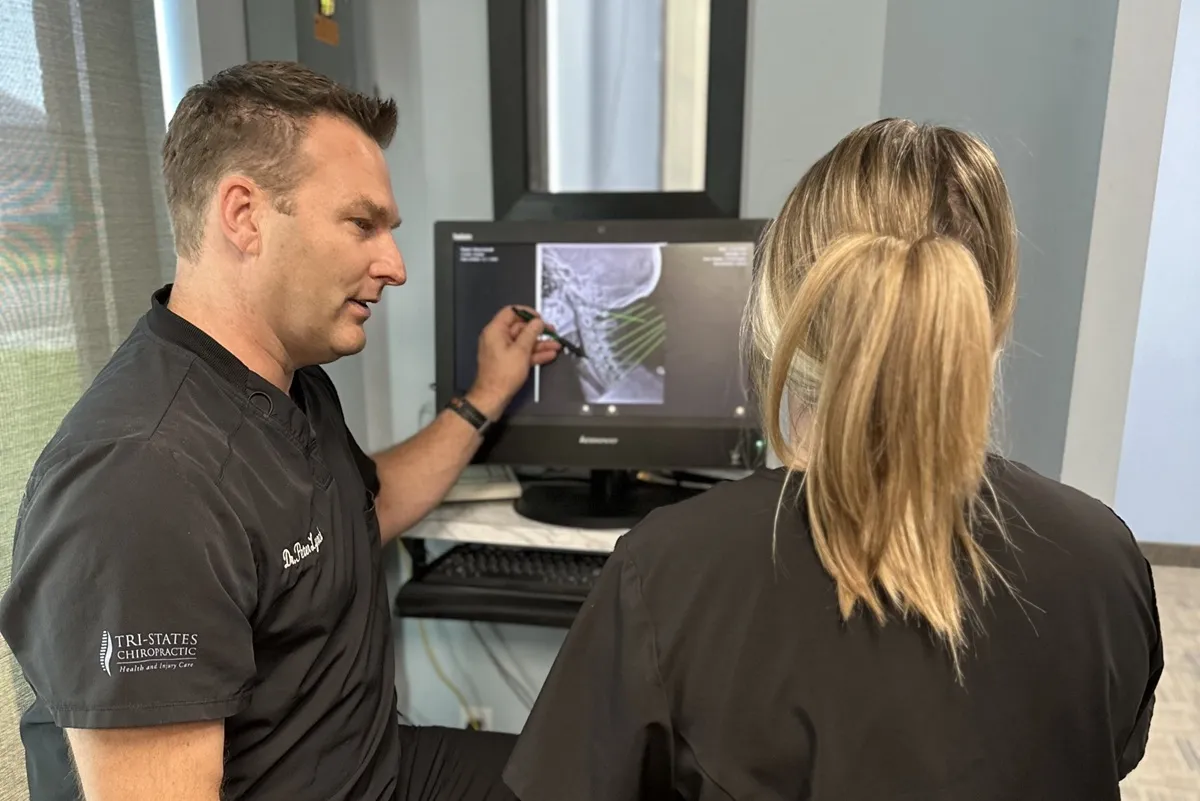
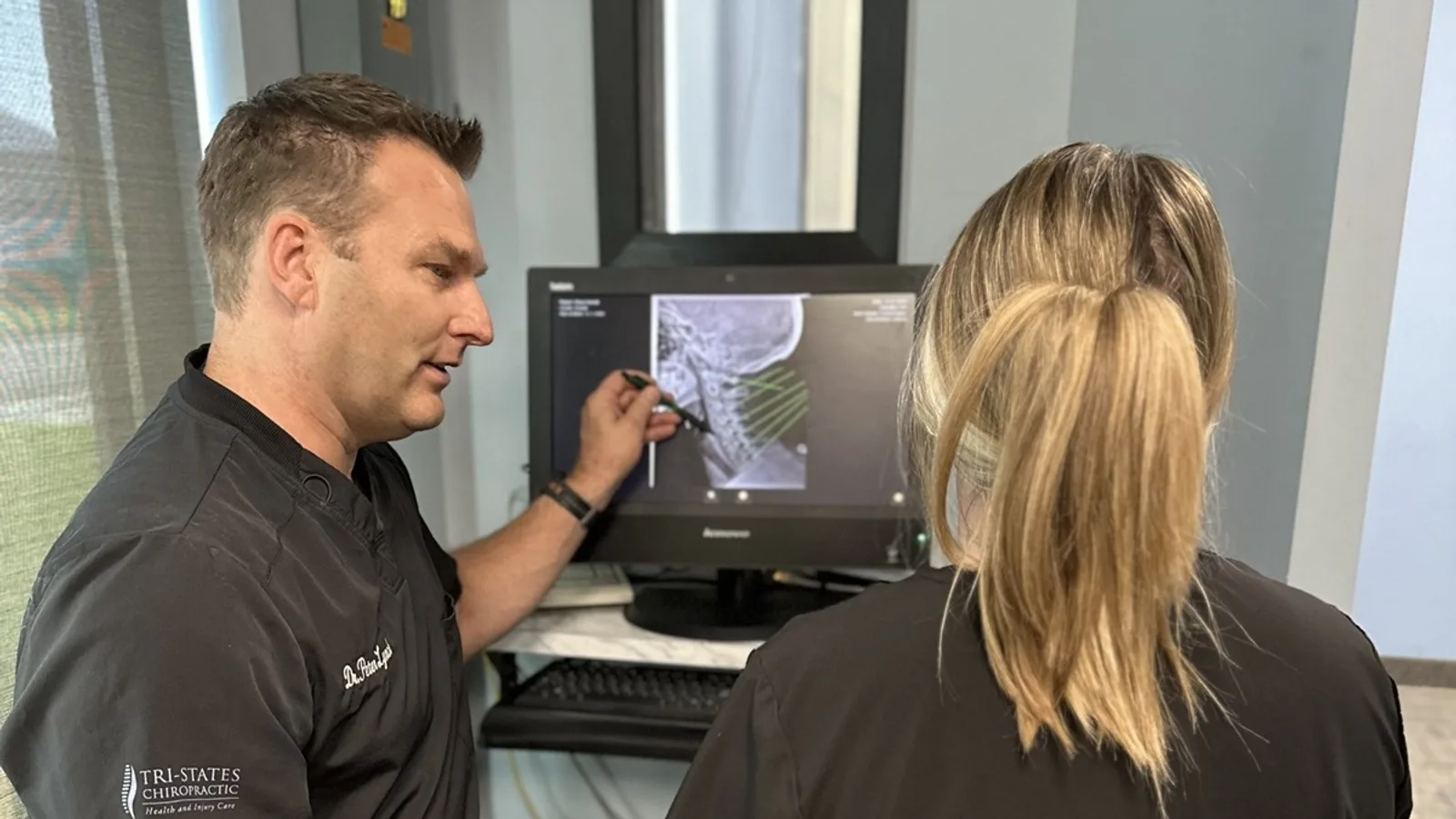
One of the most frequently overlooked contributors is muscle tension and spinal misalignment, particularly in the neck and upper back. When the vertebrae in your cervical spine (the section of your spine that runs through your neck) are not moving properly, they can create tension, irritation, and nerve interference that radiates pain upward into the skull. This is something Dr. Peter Lynch evaluates carefully during every headache-related consultation at Tri-States Chiropractic.
Other common physical contributors include poor posture — especially the forward head posture that comes from prolonged screen use — jaw tension (sometimes called TMJ dysfunction), and even restricted breathing patterns. Each of these can create a cycle of muscle tension that builds over time and eventually expresses itself as a headache.
Beyond the physical, lifestyle factors play a major role. Dehydration, poor sleep, high stress levels, irregular meal schedules, and excessive caffeine consumption are all well-recognized contributors to both tension-type headaches and migraines. The tricky part is that these triggers often work together, meaning a single stressor might not cause a headache on its own — but combined with a busy week, a few nights of poor sleep, and a stiff neck, it just might.
The Neck-Headache Connection: Cervicogenic Headaches
If you've never heard the term "cervicogenic headache," you're not alone — but it's something Dr. Peter Lynch commonly identifies in patients here in Dubuque who have been struggling with headaches for months or even years. Cervicogenic simply means "originating from the cervical spine," or your neck.
The anatomy behind this is actually quite straightforward. The upper cervical spine — specifically the first three vertebrae — shares nerve pathways with the trigeminal nerve, which is the main sensory nerve of the face and head. When joints in this area become restricted, inflamed, or irritated, they can refer pain upward into the back of the head, temples, behind the eyes, or even across the forehead.
What makes cervicogenic headaches particularly tricky is that they often mimic migraines or tension headaches. Patients may experience light sensitivity, nausea, and one-sided pain — symptoms that are commonly attributed to migraines. The key distinguishing feature is that cervicogenic headaches are almost always associated with neck stiffness or discomfort and are often reproduced or worsened by certain neck movements or sustained neck positions.
Research published in respected journals such as the Spine Journal and reviewed by organizations like the National Center for Complementary and Integrative Health (NCCIH) suggests that spinal manipulation and mobilization of the cervical spine can be an effective approach for managing cervicogenic headaches. This is one of the core reasons why patients in the Dubuque area seek out chiropractic evaluation when traditional headache treatments haven't provided lasting relief.
Common Migraine Triggers You Might Be Overlooking
Migraines are complex neurological events, and their triggers can vary considerably from person to person. While some triggers — like bright lights, strong smells, or hormonal fluctuations — are widely known, others are frequently missed or misunderstood.
Postural stress and musculoskeletal tension are among the most underappreciated migraine triggers. Sitting at a desk for hours, craning your neck toward a screen, or carrying tension in your shoulders and upper traps can all create the kind of sustained muscular stress that sets the stage for a migraine. Over time, this tension affects blood flow, nerve signaling, and muscle balance in ways that can prime the brain for a migraine episode.
Sleep disruption is another significant and often overlooked factor. Both too little and too much sleep can trigger migraines, which speaks to how sensitive the nervous system is to routine and regularity. Irregular sleep schedules — common in shift workers or those with high-stress lifestyles — are particularly problematic.
Dietary factors such as skipped meals, alcohol (especially red wine), aged cheeses, and foods containing nitrates or MSG have been associated with migraine onset in susceptible individuals. It's worth noting that food triggers don't affect everyone equally, and keeping a headache diary can help you identify your personal patterns.
Emotional stress and anxiety are consistently reported as major migraine triggers. The connection between psychological stress and headache activity is well documented. Stress activates the body's fight-or-flight response, which causes muscle tension, changes in blood vessel behavior, and altered nervous system activity — all of which can contribute to a migraine.
How Chiropractic Care May Help
Chiropractic care is a non-invasive, drug-free approach to health that focuses on the relationship between the spine, the nervous system, and overall body function. For headache and migraine sufferers, this approach can be particularly relevant — especially when musculoskeletal factors are contributing to the problem.
At Tri-States Chiropractic, Dr. Peter Lynch takes a thorough, individualized approach to evaluating each patient. Rather than simply treating headache symptoms, the goal is to identify underlying biomechanical issues — such as restricted cervical joints, muscle imbalances, or postural dysfunction — that may be fueling the cycle of chronic headaches.
Chiropractic spinal adjustments — also called spinal manipulation — involve gentle, targeted movements applied to specific joints in the spine. For patients whose headaches are rooted in cervical dysfunction, these adjustments can help restore normal joint motion, reduce muscular tension, and decrease nerve irritation. Evidence indicates that spinal manipulation may be effective for tension-type headaches and cervicogenic headaches, and some research suggests potential benefit for migraines as well, though results can vary.
Beyond adjustments, care at Tri-States Chiropractic may also include soft tissue therapy, postural correction guidance, ergonomic recommendations, and education about lifestyle factors that may be contributing to headache frequency. The goal is always to address the whole person — not just the symptom.
Practical Tips for Managing Headache Frequency
While professional care is important for addressing structural and neurological contributors to chronic headaches, there is a great deal you can do on your own to support your health between visits. Here in Dubuque, IA, Dr. Peter Lynch regularly shares these types of strategies with patients because prevention is always more powerful than treatment.
Prioritize consistent hydration. Dehydration is one of the most common and most preventable headache triggers. Aim to drink water steadily throughout the day rather than trying to catch up all at once. If you're prone to headaches, making a conscious habit of reaching for water first thing in the morning can make a meaningful difference.
Evaluate your workstation setup. Forward head posture — sometimes called "tech neck" — adds significant load to the muscles and joints of your cervical spine. Your screen should be at eye level, your chair should support your lower back, and your feet should rest flat on the floor. Small ergonomic adjustments can reduce cumulative strain on your neck and upper back considerably.
Build in movement breaks. If you work at a desk or spend long periods sitting, set a reminder to get up and move every 30 to 45 minutes. Gentle neck stretches, shoulder rolls, and brief walks give your muscles a chance to reset before tension builds to the point of triggering a headache.
Track your patterns. A simple headache diary — recording when your headaches occur, how long they last, their intensity, and any potential triggers — can be an incredibly valuable tool. Over time, patterns become visible that are nearly impossible to notice in the moment. Bringing this diary to your appointment at Tri-States Chiropractic gives Dr. Peter Lynch a much clearer picture of what's driving your symptoms.
When to See a Chiropractor for Headaches
You don't have to wait until your headaches become severe or daily to seek chiropractic evaluation. In fact, earlier intervention often leads to better outcomes. If you're experiencing headaches more than a few times per week, noticing that over-the-counter pain relievers are becoming less effective, or finding that your headaches are affecting your work, sleep, or relationships, it's a good time to reach out to a qualified chiropractor.
Chiropractic care is particularly worth exploring when your headaches are accompanied by neck stiffness or soreness, when they seem to be triggered or worsened by certain postures or neck positions, or when you've already been evaluated medically and no serious underlying condition has been identified.
That said, there are certain headache symptoms that require immediate medical attention rather than chiropractic care. These include a sudden, severe headache unlike any you've had before (sometimes called a "thunderclap headache"), headaches following a head injury or accident, headaches accompanied by fever and stiff neck, neurological symptoms such as vision loss, slurred speech, weakness, or numbness, or headaches that progressively worsen over days or weeks. These are potential red flags for serious medical conditions, and you should seek emergency medical care right away.
Headache Types at a Glance
Headache Type | Common Location | Key Characteristics | Common Triggers | May Benefit from Chiropractic? |
|---|---|---|---|---|
Tension-Type Headache | Both sides of head, forehead, or band-like | Dull, pressure-like ache; mild to moderate | Stress, poor posture, muscle tension | Yes — evidence supports spinal manipulation |
Cervicogenic Headache | Back of head, neck, behind one eye | Stiff neck, pain worsened by neck movement | Restricted cervical joints, poor posture | Yes — strong evidence for cervical manipulation |
Migraine | Often one-sided, behind eye or temple | Throbbing; nausea, light/sound sensitivity common | Hormonal changes, stress, food, sleep disruption | Possibly — some research suggests benefit |
Cluster Headache | Around or behind one eye | Severe, sharp, cyclical; short duration | Alcohol, altitude, disrupted sleep | Limited evidence; medical co-management recommended |
Medication Overuse Headache | Diffuse, whole head | Daily or near-daily; rebound from pain medication | Frequent use of OTC or prescription pain relievers | Supportive; best addressed with physician guidance |
Myths vs. Facts About Chronic Headaches
Myth: Headaches are just a normal part of life and aren't worth treating.
Fact: While headaches are extremely common, frequent or chronic headaches are not something you simply have to accept. They are often a signal that something in your body needs attention — whether that's a structural issue, a lifestyle factor, or a combination of both. Chronic headaches are a genuine medical concern that deserves proper evaluation and care.
Myth: Migraines are purely caused by brain chemistry and can't be influenced by musculoskeletal factors.
Fact: Migraines do involve complex neurological and vascular mechanisms, but that doesn't mean musculoskeletal factors are irrelevant. Muscle tension in the neck and upper back, restricted cervical joint movement, and postural stress have all been associated with increased migraine frequency and severity. Addressing these physical contributors can be a meaningful part of a comprehensive migraine management plan.
Myth: Taking pain relievers every time you get a headache is the safest long-term solution.
Fact: Overuse of pain-relieving medications — including over-the-counter options — can actually lead to what's known as medication overuse headache, sometimes called a rebound headache. This is a recognized condition in which the very medication being used to relieve headaches begins to cause them with increasing frequency. Finding and treating root causes is a safer long-term strategy.
Myth: Chiropractic adjustments aren't safe for headache patients.
Fact: When performed by a licensed chiropractor on appropriately screened patients, cervical spinal manipulation is considered a safe and evidence-supported intervention for tension-type and cervicogenic headaches. Dr. Peter Lynch conducts thorough evaluations prior to initiating any care to ensure that chiropractic treatment is appropriate and safe for each individual patient.
Myth: You only need to see a chiropractor when the pain is unbearable.
Fact: Chiropractic care is most effective when begun early, before patterns of dysfunction become deeply ingrained. Waiting until pain is extreme often means the underlying problem has been building for a long time and may require more extensive care to correct. Proactive evaluation — especially if headaches are becoming more frequent — is always the better approach.
Final Thoughts from Tri-States Chiropractic
Living with chronic headaches or migraines takes a real toll — on your work, your relationships, your energy, and your overall enjoyment of life. Here in Dubuque, IA, we see patients at Tri-States Chiropractic who have been dealing with recurring headaches for years, often without ever having the underlying causes properly identified or addressed.
Dr. Peter Lynch and the team at Tri-States Chiropractic are committed to providing thorough, thoughtful, individualized care for headache sufferers in our community. The approach here is never one-size-fits-all. Every patient is different, every headache pattern tells a unique story, and every care plan is built around what that individual person actually needs.
If you're tired of managing headache symptoms without getting to the root of the problem, we'd love to help. You deserve to feel better — and finding out why your headaches keep happening is the most important first step on that path.
Frequently Asked Questions
Can a chiropractor help with migraines?
Research suggests that chiropractic care, particularly spinal manipulation, may help reduce the frequency and intensity of migraines in some patients — especially when musculoskeletal tension or cervical dysfunction is a contributing factor. Results vary from person to person, and chiropractic is best approached as part of a broader management plan for migraines.
How many chiropractic visits does it take to see improvement in headaches?
This varies significantly depending on the type of headache, how long it has been occurring, and individual health factors. Some patients notice improvement within a few visits, while others with long-standing patterns may require more consistent care over a longer period. Dr. Peter Lynch will outline realistic expectations during your initial evaluation at Tri-States Chiropractic.
What is a cervicogenic headache?
A cervicogenic headache is one that originates from dysfunction in the cervical spine — your neck. It typically presents as one-sided head pain accompanied by neck stiffness, and is often worsened by specific neck movements or sustained postures. It is one of the headache types most commonly and effectively addressed through chiropractic care.
Are tension headaches and migraines the same thing?
No — they are two distinct types of headaches, though they can sometimes overlap. Tension headaches typically feel like a dull, band-like pressure around the head, while migraines involve more intense throbbing pain, often on one side, and are frequently accompanied by nausea, light sensitivity, and visual disturbances. Proper evaluation is important to distinguish between them.
Can poor posture really cause headaches?
Yes — forward head posture and prolonged slouching place significant strain on the muscles, joints, and nerves of the neck and upper back. Over time, this strain can contribute to both tension-type headaches and cervicogenic headaches. Correcting posture and addressing associated spinal dysfunction are important components of headache management at Tri-States Chiropractic.
When should I go to the emergency room instead of a chiropractor for a headache?
Seek emergency medical care immediately if you experience a sudden, severe "thunderclap" headache, a headache following a head injury, headaches accompanied by fever and stiff neck, or neurological symptoms such as vision loss, weakness, or slurred speech. These can be signs of serious medical conditions that require immediate attention.
TL;DR
Chronic headaches and migraines are often caused by a combination of physical, lifestyle, and environmental factors — not just one single trigger.
The neck plays a major role in many headache types, including cervicogenic headaches, which originate from dysfunction in the cervical spine.
Common overlooked triggers include poor posture, dehydration, sleep disruption, stress, and dietary factors.
Chiropractic care, including spinal manipulation, has evidence supporting its use for tension-type and cervicogenic headaches, and may offer benefit for migraines in some individuals.
If headaches are frequent, worsening, or affecting your daily life, a thorough evaluation with a qualified chiropractor — like Dr. Peter Lynch at Tri-States Chiropractic in Dubuque, IA — is a sensible and proactive next step.