
If you’ve ever felt that burning, tingling, or numbness radiating through your wrist and fingers, you already know how disruptive carpal tunnel syndrome can be. It can make typing, cooking, driving — even sleeping — genuinely uncomfortable. The good news is that there are real, practical things you can do at home to find relief. These at-home exercises for carpal tunnel relief are a great starting point, and when combined with professional care, they can make a meaningful difference in how you feel day to day.
What is Carpal Tunnel Syndrome? Carpal tunnel syndrome occurs when the median nerve — which runs from your forearm through a narrow passageway in your wrist called the carpal tunnel — becomes compressed or irritated. This compression leads to the familiar symptoms of tingling, numbness, weakness, and pain in the hand, wrist, and fingers.
Why At-Home Exercises Help With Carpal Tunnel
Many people assume carpal tunnel is purely a surgical problem. That’s simply not true. Conservative, non-invasive approaches — including targeted exercises and stretches — are widely recommended as a first line of care. Organizations like the American College of Physicians and the National Institutes of Health recognize conservative management as an important option for managing carpal tunnel symptoms, particularly in mild to moderate cases.
At-home exercises work in a few key ways. They help mobilize the median nerve, reduce tissue tension around the wrist, improve circulation, and gently stretch the tendons and soft tissues that pass through the carpal tunnel. When these structures are compressed or stiff, gentle movement can create relief that lasts. Think of it like giving your wrist a chance to breathe again.
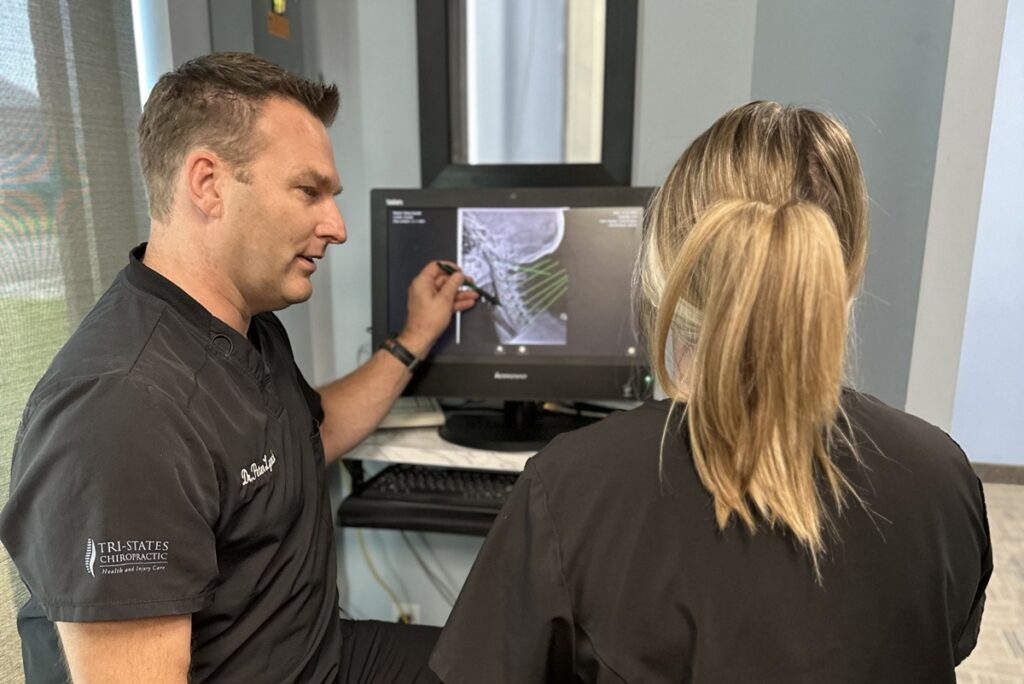
Here in Dubuque, IA, Dr. Peter Lynch at Tri-States Chiropractic sees patients regularly whose carpal tunnel symptoms are significantly aggravated by repetitive work tasks, poor ergonomics at the desk, and lack of wrist mobility. In many of those cases, a consistent exercise routine becomes one of the most powerful tools a patient has between visits.
5 At-Home Exercises That Relieve Carpal Tunnel Fast
1. Median Nerve Glide
Nerve gliding exercises — sometimes called neural flossing — are among the most well-supported movements for carpal tunnel relief. The goal is to gently mobilize the median nerve through its full range of motion so it moves freely rather than getting stuck or irritated at the wrist.
To perform a median nerve glide, start with your arm extended out to the side at shoulder height, elbow straight. Flex your wrist so your fingers point down toward the floor. Then slowly extend your wrist back so your palm faces outward and your fingers point toward the ceiling. You can add a gentle tilt of your head away from the outstretched arm to increase the stretch along the nerve. Hold each position for 3 to 5 seconds and repeat 10 times on each side. This movement should feel like a gentle stretch — never sharp or painful.
2. Wrist Flexor Stretch
Tight wrist flexor muscles are extremely common in people who spend hours typing or gripping. These muscles run along the inside of your forearm and directly affect the tension inside the carpal tunnel. Stretching them consistently can noticeably reduce pressure on the median nerve.
Extend one arm in front of you with your palm facing up. With your other hand, gently press down on your fingers and pull them back toward your body. You should feel a gentle stretch running along your inner forearm. Hold for 20 to 30 seconds and repeat 3 times per side. Perform this stretch a few times throughout the day, especially if you work at a keyboard for long periods.
3. Wrist Extensor Stretch
While the flexors tend to get the most attention, the wrist extensors on the back of your forearm also play a role in carpal tunnel discomfort. Balancing both sides of the forearm keeps the wrist in better alignment and reduces uneven tension around the carpal tunnel.
Extend your arm in front of you with your palm facing down. Use your other hand to gently press the back of your hand downward, flexing your wrist so your fingers point toward the floor. You’ll feel the stretch along the top of your forearm. Hold for 20 to 30 seconds and repeat 3 times per side. This pairs beautifully with the wrist flexor stretch above.
4. Tendon Gliding Exercises
Tendon glides are a series of specific hand positions that move the tendons of your fingers through the carpal tunnel in a coordinated, gentle way. Research suggests these movements help maintain normal tendon mobility and reduce adhesions or stiffness that can contribute to median nerve compression.
Start with your fingers straight and together. Then move through these positions in sequence: bend your fingers at the top two knuckles (hook position), curl into a full fist, open your hand flat again, and then bend just the first knuckle while keeping the middle and lower knuckles straight (tabletop position). Move slowly and deliberately through each position, holding for 3 to 5 seconds each. Repeat the full sequence 10 times. These are particularly helpful first thing in the morning when your hands tend to feel the most stiff.
5. Wrist Circles and Range of Motion
Simple and often underestimated, wrist circles help lubricate the wrist joint, reduce stiffness, and keep the surrounding soft tissue pliable. They’re easy to do anywhere — at your desk, in the car, or while watching television in the evening.
Extend both arms in front of you and slowly rotate your wrists in large, smooth circles — 10 rotations clockwise, then 10 counterclockwise. Focus on moving through the fullest comfortable range of motion. Follow up with gentle wrist side-to-side movement (ulnar and radial deviation) and up-and-down flexion and extension. This sequence takes less than two minutes and can become a valuable daily habit for anyone managing carpal tunnel symptoms.
How Often Should You Do These Exercises?
Consistency is what makes these exercises effective. Most carpal tunnel stretches and nerve glides are safe to perform daily, and many patients at Tri-States Chiropractic in Dubuque find the most relief when they incorporate them into both their morning routine and their work breaks throughout the day.
That said, it’s important to pay attention to how your body responds. Gentle stretching should produce a mild, comfortable sensation of release — not sharp pain, increased numbness, or tingling that spreads further up your arm. If any exercise worsens your symptoms, stop and check in with a qualified healthcare provider. Dr. Peter Lynch can help you modify exercises to suit your specific presentation.
A good starting rhythm is to perform each exercise once in the morning and once in the mid-afternoon. Over time, as your symptoms improve, you can adjust frequency based on how your wrist and hand are responding.
How Chiropractic Care Fits Into Carpal Tunnel Treatment
At-home exercises are a powerful tool, but they work best as part of a broader approach to care. Chiropractic care offers a non-invasive, drug-free way to address some of the underlying mechanical factors that contribute to carpal tunnel syndrome.
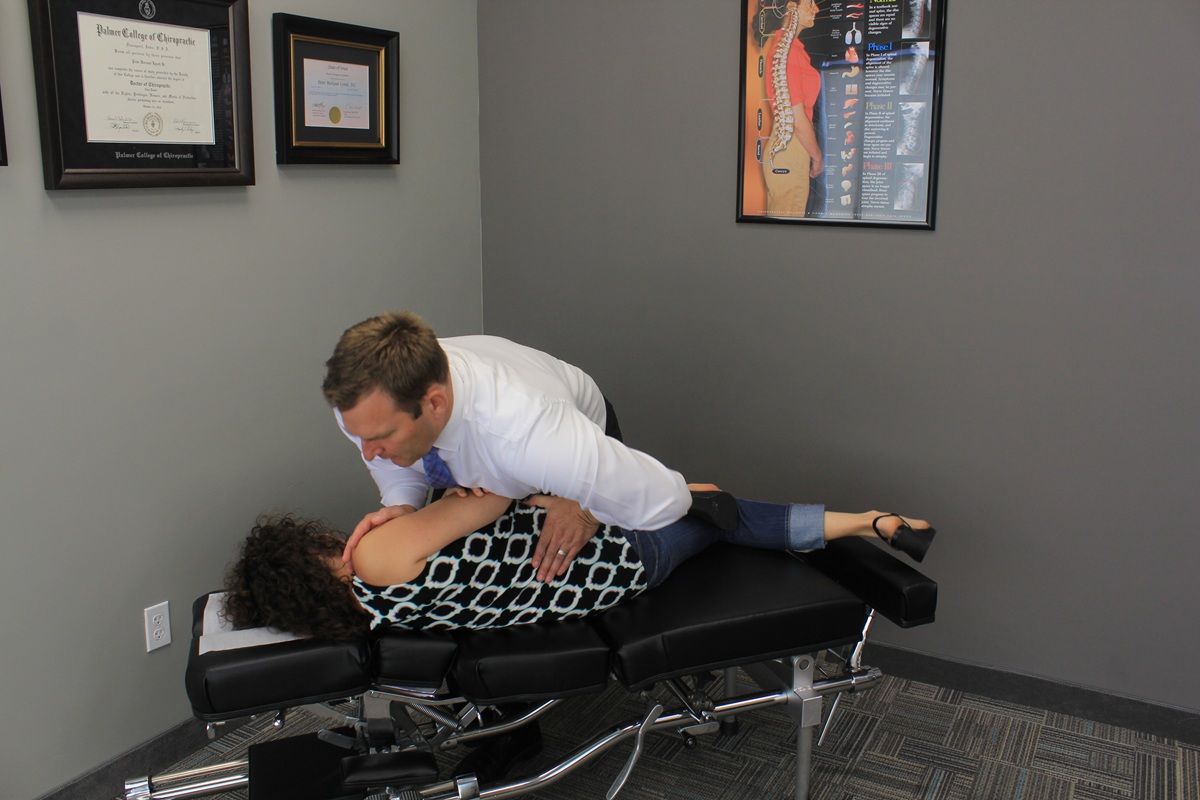
Dr. Peter Lynch at Tri-States Chiropractic in Dubuque, IA takes a whole-body approach to carpal tunnel care. That means evaluating not just the wrist, but also the alignment of the cervical spine, the thoracic outlet, and the elbow — all of which can contribute to nerve compression and symptoms that feel like carpal tunnel. Sometimes what a patient experiences in their hand has as much to do with their neck or shoulder as it does with their wrist itself.
Chiropractic adjustments to the wrist, elbow, and spine can help restore normal joint mechanics, reduce nerve irritation, and support better circulation to the affected tissues. Soft tissue techniques may also be used to address muscle tension in the forearm. Evidence indicates that conservative chiropractic care, combined with exercise therapy, can be an effective strategy for reducing carpal tunnel symptoms in appropriate candidates.
The goal at Tri-States Chiropractic is never to simply mask the pain — it’s to identify what’s driving the problem and support your body’s natural ability to heal and function well.
Practical Tips for Managing Carpal Tunnel at Home
Beyond exercises, there are several simple lifestyle habits that can significantly reduce carpal tunnel irritation. First, pay attention to your wrist position throughout the day. Keeping your wrists in a neutral, straight position — not bent up, down, or to the side — reduces pressure inside the carpal tunnel. If you type for long periods, make sure your keyboard and mouse are positioned so your wrists stay level.
Taking regular movement breaks is also essential. Holding any position for long periods — even a “good” one — leads to tissue stiffness and nerve irritation over time. Every 30 to 45 minutes, step away from your workstation, shake out your hands, and run through a quick set of wrist stretches. It takes less than two minutes and makes a real difference.
Sleeping with a neutral wrist splint can help prevent you from curling your wrists during sleep, which is a very common trigger for nighttime carpal tunnel symptoms. Many people notice immediate improvement in their overnight symptoms after starting to wear a splint at night. Ask Dr. Peter Lynch or your healthcare provider about the right type for your situation.
Carpal Tunnel Exercises at a Glance
|
Exercise |
Primary Target |
Duration / Reps |
Best Time to Do It |
|---|---|---|---|
|
Median Nerve Glide |
Median nerve mobility |
10 reps each side |
Morning & work breaks |
|
Wrist Flexor Stretch |
Inner forearm muscles |
3 x 20-30 sec each side |
Throughout the workday |
|
Wrist Extensor Stretch |
Outer forearm muscles |
3 x 20-30 sec each side |
Paired with flexor stretch |
|
Tendon Gliding |
Finger tendons through carpal tunnel |
10 reps, full sequence |
Morning (especially after waking) |
|
Wrist Circles & Range of Motion |
Wrist joint mobility & circulation |
10 circles each direction |
Anytime, several times daily |
When to See a Chiropractor for Carpal Tunnel
At-home exercises are a great starting point, but there are clear signs that it’s time to seek professional evaluation. If your symptoms have persisted for more than a few weeks despite consistent self-care, if your grip strength has noticeably weakened, or if you’re waking up multiple times per night with hand numbness and pain, those are all strong indicators that something more is going on and that professional support is warranted.
Certain symptoms should prompt you to seek care promptly. If you experience constant numbness that doesn’t come and go, weakness in your thumb that makes it hard to grip or pinch, or symptoms that are spreading up your arm toward your shoulder, these may point to more significant nerve involvement that needs to be evaluated by a healthcare professional.
Red flags that require immediate medical attention — not chiropractic care alone — include sudden loss of hand function, acute trauma to the wrist, or symptoms accompanied by significant swelling and discoloration. In these situations, please seek medical evaluation right away.
Myths vs. Facts About Carpal Tunnel
Myth: Surgery is the only real solution for carpal tunnel syndrome.
Fact: Surgery is one option, typically reserved for severe or persistent cases that haven’t responded to conservative care. Many people with mild to moderate carpal tunnel syndrome find meaningful relief through a combination of exercises, ergonomic modifications, splinting, and chiropractic care. Conservative approaches are generally recommended as the first course of action.
Myth: Carpal tunnel only happens to people who type all day.
Fact: While repetitive keyboard use is a well-known contributing factor, carpal tunnel syndrome can develop in people with a wide range of occupations and hobbies — including assembly line workers, musicians, hairstylists, and even people who knit or crochet regularly. Anatomy, hormone changes, and certain health conditions also play a role.
Myth: If your wrist hurts, it must be carpal tunnel.
Fact: Wrist pain and hand numbness can have several causes, including tendinitis, de Quervain’s tenosynovitis, arthritis, cervical radiculopathy, or thoracic outlet syndrome. An accurate diagnosis is essential before beginning any treatment plan. Dr. Peter Lynch at Tri-States Chiropractic can help assess your symptoms and determine the most likely cause.
Myth: Carpal tunnel exercises will make the condition worse.
Fact: When performed correctly and at an appropriate intensity, carpal tunnel exercises are generally safe and beneficial. The key is to avoid anything that produces sharp pain or worsens numbness. Gentle nerve glides and stretching are widely supported in the conservative care literature as part of an effective management plan.
Myth: Once you have carpal tunnel, it only gets worse over time.
Fact: The progression of carpal tunnel syndrome varies significantly from person to person. Many individuals experience meaningful improvement with consistent conservative care, lifestyle modifications, and appropriate treatment. Early intervention tends to produce the best outcomes.
Final Thoughts from Tri-States Chiropractic in Dubuque
Living with carpal tunnel symptoms doesn’t have to feel like an uphill battle. The five at-home exercises outlined here — median nerve glides, wrist flexor and extensor stretches, tendon glides, and wrist circles — are practical, evidence-informed tools you can start using today. They won’t require any special equipment, and most can be done in just a few minutes at your desk, at home, or anywhere in between.
Here at Tri-States Chiropractic in Dubuque, IA, Dr. Peter Lynch genuinely cares about helping people in our community feel better and function well — not just temporarily, but in a lasting, sustainable way. If your symptoms have been hanging around, or if self-care isn’t quite cutting it on its own, we’re here to help you figure out what’s going on and put together a plan that makes sense for your life and your goals.
You deserve to use your hands without pain. And often, the right combination of education, exercise, and professional care can help you get there. Don’t hesitate to reach out to our team at Tri-States Chiropractic — we’re always glad to answer questions and help you take the next step toward feeling better.
Frequently Asked Questions
Can these exercises cure carpal tunnel syndrome?
At-home exercises are not a cure, but they are an important part of managing and reducing carpal tunnel symptoms for many people. Combined with professional care and ergonomic adjustments, they can lead to significant and lasting improvement. Severe cases may still require medical intervention.
How long does it take to notice improvement from carpal tunnel exercises?
Many people notice some degree of symptom relief within a few weeks of consistent daily practice. However, individual results vary based on the severity of compression, how long symptoms have been present, and other contributing factors. Patience and consistency are key.
Is it safe to do these exercises if I’m pregnant?
Carpal tunnel syndrome is actually very common during pregnancy due to fluid retention and hormonal changes. Most of these gentle stretches are considered safe, but it’s always a good idea to check with your OB and chiropractor before starting any new exercise routine during pregnancy.
Should I wear a wrist brace while doing these exercises?
Generally, you should remove a wrist brace before performing carpal tunnel exercises, as the brace restricts the range of motion needed to complete them properly. Wrist braces are most beneficial during sleep or activities that tend to aggravate your symptoms.
Can a chiropractor help with carpal tunnel if it’s in both wrists?
Yes. Bilateral carpal tunnel symptoms are not uncommon, and chiropractic care can address both sides. Dr. Peter Lynch will evaluate the mechanics of both wrists as well as the cervical spine and other areas that may be contributing to nerve irritation on both sides of the body.
When is carpal tunnel surgery actually necessary?
Surgery is typically considered when symptoms are severe, have persisted for a significant period despite conservative treatment, or when there is measurable loss of nerve function. Your medical doctor, in coordination with your chiropractor, can help you determine when that threshold has been reached.
TL;DR Summary
-
Carpal tunnel syndrome involves compression of the median nerve at the wrist, causing pain, tingling, and numbness in the hand and fingers.
-
Five effective at-home exercises include median nerve glides, wrist flexor stretches, wrist extensor stretches, tendon glides, and wrist circles — all of which can be done daily with no equipment.
-
Consistency matters — performing these exercises in the morning and during work breaks tends to produce the best results over time.
-
Chiropractic care from Dr. Peter Lynch at Tri-States Chiropractic in Dubuque, IA can complement your at-home routine by addressing joint mechanics, nerve irritation, and contributing spinal factors.
-
Seek professional evaluation if symptoms are persistent, worsening, or accompanied by significant grip weakness or constant numbness.