You’ve tried everything. Heat packs, ice, over-the-counter pain relievers, maybe even a new pillow or two. Yet your neck pain persists, sometimes worse in the morning, sometimes flaring up after a long day at work. If you’re nodding your head in frustration right now (carefully, of course), you’re not alone. Neck pain affects millions of Americans every year, and here in Dubuque, we see patients every week who are confused and discouraged because their neck discomfort just won’t resolve. The truth is, chronic neck pain rarely stems from a single, obvious cause. More often, it’s a combination of hidden factors working together to keep you uncomfortable. In this article, we’ll explore seven surprising reasons your neck pain won’t go away and what you can do about it.
What is chronic neck pain? Chronic neck pain is discomfort in the cervical spine region that persists for more than three months. Unlike acute neck pain from a sudden injury, chronic neck pain often develops gradually and may have multiple contributing factors including posture, biomechanical dysfunction, lifestyle habits, and underlying musculoskeletal imbalances.
Table of Contents
- Hidden Postural Stress You Don’t Even Notice
- Your Jaw Might Be the Real Culprit
- Poor Breathing Patterns Are Straining Your Neck
- Old Injuries Never Properly Healed
- Your “Ergonomic” Desk Setup Isn’t Actually Ergonomic
- You’re Sleeping in Positions That Sabotage Your Spine
- Chronic Stress Is Creating Physical Tension
- How Chiropractic Care Addresses These Root Causes
- What You Can Do Starting Today
- When to See a Chiropractor
- Final Thoughts
Reason #1: Hidden Postural Stress You Don’t Even Notice
Most people know that slouching is bad for your neck. What surprises many patients at Tri-States Chiropractic in Dubuque is learning about the subtle postural habits they don’t even realize they’re doing. We’re talking about the small, repetitive positions your body assumes dozens of times throughout the day.
Consider how often you tilt your head to hold your phone between your ear and shoulder. Or how you crane your neck forward when reading text messages. Research suggests that for every inch your head moves forward from its neutral position, it adds approximately 10 pounds of additional stress on your cervical spine. When your head is tilted forward at a 60-degree angle, common when texting, your neck is supporting the equivalent of 60 pounds.
These micro-traumas accumulate over time. Your neck muscles, ligaments, and joints weren’t designed to handle this constant strain. Eventually, the tissues become irritated, inflamed, and painful. The surrounding muscles develop trigger points and tightness as they work overtime trying to stabilize an unstable spine.
What makes this particularly tricky is that you’ve likely adapted to these positions. They feel normal to you. Your brain has recalibrated what “straight” feels like, so when someone points out your forward head posture, it might actually feel strange to correct it. This is why professional assessment is so valuable. A trained chiropractor can identify postural deviations you’ve become blind to.
Reason #2: Your Jaw Might Be the Real Culprit
Here’s something that surprises many of our Dubuque patients: your jaw and your neck are biomechanically connected. The temporomandibular joint, or TMJ, sits just in front of your ear and is closely integrated with the muscles and nerves of your upper cervical spine.
If you grind your teeth at night, clench your jaw during stressful moments, or have misalignment in your bite, the resulting tension doesn’t stay isolated to your jaw. The muscles that control jaw movement, particularly the masseter and temporalis muscles, attach to areas of your skull that directly influence neck mechanics. When these muscles are chronically tight or imbalanced, they can pull on the cervical spine and create pain patterns that radiate down your neck.
TMJ dysfunction can also alter the position of your head on your neck. Your body naturally tries to find a comfortable position for your jaw, and sometimes this means shifting your head forward or to one side. Over time, this compensation pattern becomes habitual, creating ongoing neck strain.
Many people don’t connect their jaw issues with their neck pain because the symptoms seem separate. You might notice clicking when you chew, occasional jaw soreness, or headaches around your temples without realizing these are clues to a larger pattern affecting your neck. Evidence indicates that addressing TMJ dysfunction often provides significant relief for associated neck pain.
Reason #3: Poor Breathing Patterns Are Straining Your Neck
Most people don’t think about how they breathe until something goes wrong. But dysfunctional breathing patterns are a surprisingly common contributor to persistent neck pain, especially in our modern, stress-filled world.
Proper breathing should primarily involve your diaphragm, the large dome-shaped muscle at the base of your ribcage. When you breathe diaphragmatically, your belly expands on the inhale and contracts on the exhale. Your shoulders and neck remain relatively still.
However, many people have shifted to what’s called “accessory breathing” or “chest breathing.” This pattern relies heavily on the muscles of your neck and upper chest, including the scalenes and sternocleidomastoid muscles. These muscles weren’t designed to be primary breathing muscles. When they’re recruited breath after breath, hour after hour, they become overworked, tight, and painful.
Chronic stress, anxiety, poor posture, and even tight clothing can all contribute to this dysfunctional breathing pattern. Here in Dubuque, we see this frequently in patients who work desk jobs or experience high levels of daily stress. They’ve unconsciously shifted to shallow, rapid chest breathing, and their neck muscles are paying the price.
The connection becomes a vicious cycle. Neck pain causes tension, tension increases stress, stress promotes poor breathing, and poor breathing creates more neck tension. Breaking this cycle requires awareness and retraining, but the results can be remarkably effective.
Reason #4: Old Injuries Never Properly Healed
Did you have a car accident five years ago? Maybe you took a hard fall playing sports in high school? Perhaps you slipped on ice one winter and jarred your neck? Many patients at Tri-States Chiropractic are surprised to learn that an old injury they thought had healed might actually be contributing to their current neck pain.
When your neck experiences trauma, the immediate pain and obvious symptoms typically resolve within weeks or months. However, the underlying biomechanical changes often persist. Ligaments may have stretched and never fully regained their original tension. Joints may have developed subtle misalignments. Scar tissue may have formed in muscles and connective tissue, creating restrictions in movement.
These residual effects often don’t cause noticeable problems right away. Your body is remarkably adaptable and compensates for these dysfunctions. But over time, those compensations create their own problems. The muscles and joints working overtime to pick up the slack eventually become overloaded and painful.
This is particularly common with whiplash injuries from motor vehicle accidents. Research has shown that whiplash can create long-term changes in neck proprioception (your sense of where your neck is in space), muscle activation patterns, and joint mechanics. Even years after the accident, these changes can contribute to persistent discomfort.
What makes this challenging is that the connection between your old injury and your current pain isn’t always obvious. The pain might be in a different location, feel different in quality, and occur under different circumstances. A thorough examination that includes your injury history is essential for identifying these hidden contributors.
Reason #5: Your “Ergonomic” Desk Setup Isn’t Actually Ergonomic
You bought an ergonomic chair. You positioned your monitor at eye level. You even got a standing desk converter. So why does your neck still hurt after a day at the office? The problem is that ergonomic equipment alone doesn’t guarantee ergonomic positioning.
True ergonomics is about the relationship between your body and your workspace throughout your entire workday. Many well-intentioned setups fall short because of subtle but significant flaws. Your monitor might be at the right height when you’re sitting upright, but what happens after an hour when you’ve gradually slouched forward? Your fancy chair might support good posture, but are you actually using that support, or are you perched on the front edge?
Here in Dubuque, we frequently evaluate workspace setups for our patients and find common problems. Monitors positioned too far away cause leaning and straining. Dual monitor setups create constant rotation if not centered properly. Laptops used as primary computers force the head and neck into compromised positions. Armrests set too high or too low change shoulder position, which directly affects neck mechanics.
Another often-overlooked factor is that no static position is ideal for eight hours straight, no matter how ergonomic. Your body needs movement and variation. Evidence indicates that prolonged static postures, even technically correct ones, can contribute to musculoskeletal discomfort. The best ergonomic setup is one that you regularly adjust and move away from.
Reason #6: You’re Sleeping in Positions That Sabotage Your Spine
You spend roughly a third of your life sleeping. If your sleep position is putting your neck in a compromised position for seven to nine hours every night, that’s a significant amount of cumulative stress on your cervical spine.
Stomach sleeping is the biggest offender. When you sleep on your stomach, your neck must rotate 90 degrees to one side for the entire night so you can breathe. This sustained rotation compresses the joints on one side while overstretching the tissues on the other. Night after night, this creates imbalances, restrictions, and pain. Many patients tell us they’ve “always slept on their stomach” and can’t imagine changing, but this position is simply not compatible with long-term neck health.
Side sleeping can also create problems if not done properly. If your pillow is too high or too low, your neck will be bent for hours at a time. Your top shoulder can also roll forward, creating additional strain on your neck and upper back.
Even back sleeping, generally the best position for spinal health, can cause issues with the wrong pillow. A pillow that’s too thick pushes your head too far forward. A pillow that’s too thin allows your head to drop back. Both positions create sustained stress on the cervical structures.
What complicates this issue further is that you can’t control what you do once you fall asleep. You might start the night in a good position but shift into problematic positions as you move through sleep cycles. This is why choosing the right pillow for your sleeping style and working to retrain your preferred sleep position is so important.
Reason #7: Chronic Stress Is Creating Physical Tension
The mind-body connection isn’t some abstract concept. It’s a physiological reality, and nowhere is this more apparent than in the relationship between stress and neck pain. When you experience psychological stress, your body responds with a predictable pattern of muscle tension, particularly in the neck, shoulders, and jaw.
This is an evolutionary response. When our ancestors faced threats, tensing these muscles prepared them for fight-or-flight action. The problem is that modern stressors—work deadlines, financial concerns, relationship conflicts, traffic jams—trigger the same response, but we rarely get the physical release that fighting or fleeing would provide. Instead, we sit at our desks or in our cars, muscles clenched, stress hormones circulating, tension building.
Over time, chronic stress can create what’s called muscle guarding, where your neck muscles are in a constant state of low-level contraction. You might not even notice it anymore because it’s become your normal state. This ongoing tension restricts blood flow, creates trigger points, reduces range of motion, and eventually leads to pain.
What makes stress-related neck pain particularly stubborn is that it’s self-perpetuating. Pain creates more stress, more stress creates more tension, more tension creates more pain. Many patients at Tri-States Chiropractic in Dubuque report that their neck pain is worse during particularly stressful periods at work or home, which is a clear indication of this connection.
Addressing stress-related neck tension requires a multi-faceted approach. Physical interventions like chiropractic adjustments can release the muscular tension and restore proper joint function. But lasting relief often requires also addressing the stress itself through stress management techniques, breathing exercises, regular movement, and sometimes professional counseling.
How Chiropractic Care Addresses These Root Causes
Chiropractic care offers a comprehensive, non-invasive approach to addressing the multiple factors that contribute to persistent neck pain. Rather than simply masking symptoms with medication, chiropractic treatment focuses on identifying and correcting the underlying biomechanical dysfunctions that keep you uncomfortable.
At Tri-States Chiropractic in Dubuque, we begin with a thorough evaluation that examines not just your neck, but your entire spine, posture, movement patterns, and relevant history. We look for the hidden contributors we’ve discussed: postural imbalances, old injuries, breathing patterns, jaw dysfunction, and lifestyle factors.
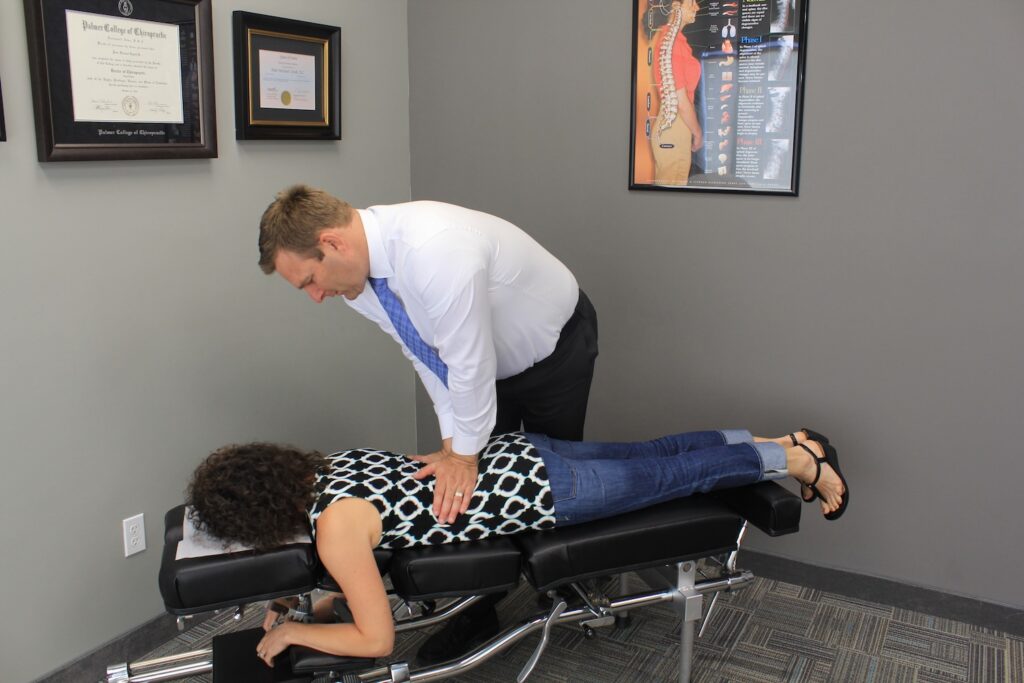
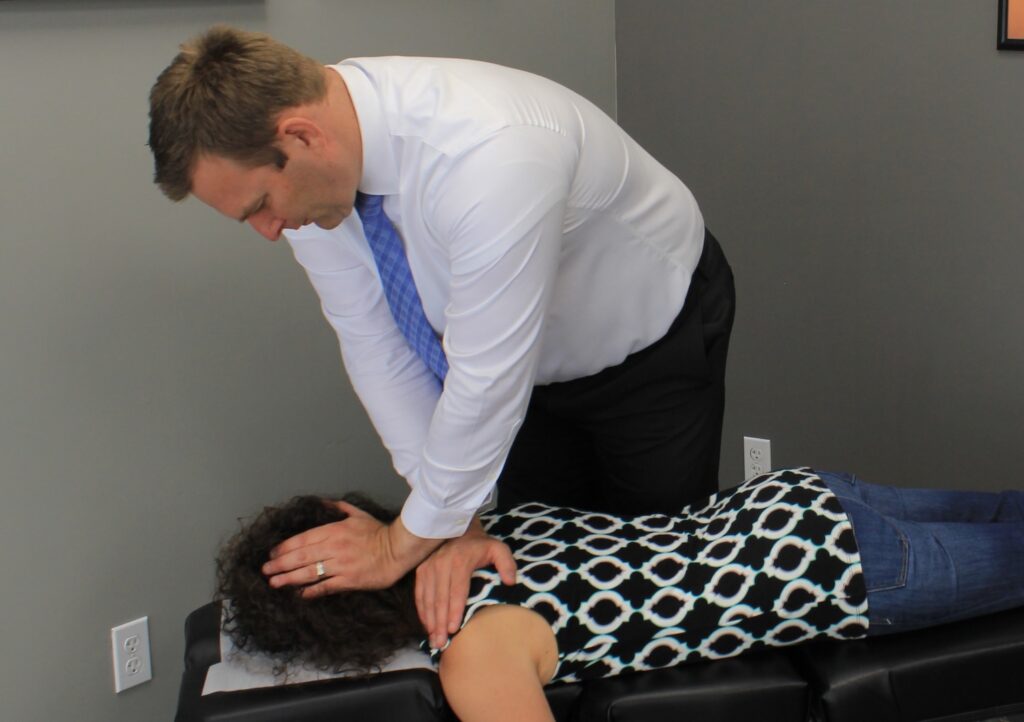
Chiropractic adjustments work to restore proper alignment and movement to the joints of your cervical spine. When joints are misaligned or restricted, they don’t move through their full, healthy range of motion. This creates compensations, muscle imbalances, and pain. Gentle, specific adjustments help restore normal joint mechanics, which allows the surrounding muscles to relax and function properly.
Beyond adjustments, comprehensive chiropractic care often includes soft tissue therapies to address muscle tension and trigger points, rehabilitative exercises to strengthen weak muscles and improve stability, and postural and ergonomic education to help you make sustainable changes in your daily habits.
Research has shown chiropractic care to be an effective treatment option for neck pain. The American College of Physicians includes spinal manipulation in its clinical practice guidelines for the management of acute and chronic neck pain. Many patients find significant relief through conservative chiropractic care, avoiding the need for medications with potential side effects or invasive procedures.
What makes chiropractic care particularly valuable for stubborn neck pain is its individualized approach. Your treatment plan is tailored to your specific findings, history, and contributing factors. We’re not just treating “neck pain” in general. We’re addressing your unique combination of postural stress, biomechanical dysfunction, lifestyle factors, and other contributors.
| Factor Contributing to Neck Pain | How Chiropractic Care Addresses It |
|---|---|
| Postural dysfunction and forward head posture | Spinal adjustments restore alignment; postural exercises strengthen supporting muscles; ergonomic education prevents recurrence |
| TMJ dysfunction affecting neck mechanics | Upper cervical adjustments; soft tissue work on jaw muscles; referral to dental specialists when appropriate |
| Dysfunctional breathing patterns | Diaphragmatic breathing exercises; release of accessory breathing muscles; postural corrections |
| Old injuries with residual dysfunction | Identify and correct chronic misalignments; break up scar tissue; restore normal movement patterns |
| Ergonomic workspace issues | Detailed workspace evaluation; specific recommendations for setup; education on movement breaks |
| Poor sleep positions and pillow problems | Sleep position recommendations; pillow selection guidance; exercises to improve tolerance for better positions |
| Stress-related muscle tension | Adjustments and soft tissue work release tension; breathing exercises reduce stress response; lifestyle counseling |
What You Can Do Starting Today
While professional chiropractic care is often necessary for persistent neck pain, there are several practical steps you can take on your own to start addressing these hidden contributing factors.
Start by becoming more aware of your posture throughout the day. Set reminders on your phone every hour to check in with your body. Are your shoulders rounded forward? Is your head jutting out? Is your jaw clenched? Simply bringing awareness to these patterns is the first step toward changing them. When you catch yourself in a poor position, gently correct it without judgment.
Practice diaphragmatic breathing for five minutes twice a day. Lie on your back with one hand on your chest and one on your belly. Breathe slowly and deeply, trying to move the hand on your belly while keeping the hand on your chest relatively still. This retrains your breathing pattern and gives your neck muscles a much-needed break from accessory breathing.
Evaluate your workspace honestly. Sit in your normal working position and have someone take a photo of you from the side. Look at your head position, shoulder position, and the relationship between your eyes and your screen. Make adjustments based on what you see. Your monitor should be at arm’s length away, with the top of the screen at or slightly below eye level.
Take movement breaks every 30 to 45 minutes. Stand up, walk around, do some gentle neck circles and shoulder rolls. No position is good for extended periods. Your body needs regular movement and position changes to stay healthy.
If you’re a stomach sleeper, start working on transitioning to side or back sleeping. This won’t happen overnight, but you can make gradual progress. Try using a body pillow to make side sleeping more comfortable, or placing a pillow under your knees when back sleeping to reduce lower back strain.
Address your stress through whatever healthy methods work for you. Regular exercise, meditation, time in nature, social connection, creative hobbies, and adequate sleep all help reduce the physical manifestations of psychological stress. You might not be able to eliminate your stressors, but you can change how your body responds to them.
Invest in a quality pillow appropriate for your sleeping position. For back sleepers, choose a thinner pillow that supports the natural curve of your neck. For side sleepers, you need a thicker, firmer pillow that fills the space between your ear and shoulder. Replace your pillow every 12 to 18 months as they lose support over time.
When to See a Chiropractor for Your Neck Pain
Not all neck pain requires professional intervention. Minor stiffness or soreness that resolves within a few days with rest and self-care is usually not a concern. However, there are several situations where seeing a chiropractor is appropriate and recommended.
If your neck pain has persisted for more than two weeks despite self-care measures, it’s time to seek professional evaluation. Chronic pain indicates an underlying problem that won’t resolve on its own. The longer you wait, the more entrenched dysfunctional patterns can become.
Pain that interferes with your daily activities, work performance, sleep quality, or overall wellbeing deserves attention. You shouldn’t have to live with constant discomfort or function at a diminished level because of neck pain.
If your neck pain is accompanied by headaches, especially if those headaches are new, increasing in frequency, or different from headaches you’ve experienced before, professional evaluation is important. Many headaches originate from cervical spine dysfunction and respond well to chiropractic care.
Pain that radiates into your shoulder, arm, or hand, particularly if accompanied by numbness, tingling, or weakness, may indicate nerve involvement and requires prompt assessment. While many of these cases can be successfully managed with conservative chiropractic care, proper diagnosis is essential.
If you’ve recently been in a car accident, had a fall, or experienced other trauma to your neck, even if the pain seems minor, getting checked is wise. As we discussed earlier, injuries can create long-term dysfunctions even after the initial pain resolves. Early intervention can prevent chronic problems from developing.
There are also red flag symptoms that warrant immediate medical attention rather than chiropractic care. These include neck pain following a high-impact trauma, pain accompanied by fever, severe headache with neck stiffness, difficulty walking or maintaining balance, loss of bowel or bladder control, or severe pain that progressively worsens. These symptoms could indicate serious medical conditions requiring emergency evaluation.
Myths vs. Facts About Persistent Neck Pain
Myth: If nothing shows up on my X-ray or MRI, my neck pain isn’t real or can’t be helped
Fact: Most neck pain stems from soft tissue dysfunction, muscle imbalances, and joint restrictions that don’t appear on standard imaging. Your pain is real even if imaging is normal. Chiropractic care specifically addresses these functional problems that imaging often misses.
Myth: Cracking your own neck provides the same benefit as a chiropractic adjustment
Fact: Self-manipulation creates movement in the joints that are already too mobile while the restricted joints remain stuck. Chiropractic adjustments are specific, controlled movements targeting the exact joints that need correction. Self-cracking can actually worsen underlying problems and create joint instability over time.
Myth: Neck pain is just a normal part of getting older
Fact: While degenerative changes increase with age, pain is not an inevitable consequence of aging. Many people in their 70s and 80s have little to no neck pain, while some people in their 30s suffer chronically. The difference is usually related to biomechanics, posture, lifestyle factors, and whether underlying dysfunctions have been addressed.
Myth: Once you start chiropractic care, you have to keep going forever
Fact: Initial intensive care is often needed to correct long-standing problems, but the goal is always to restore function and give you tools for self-management. Some patients choose ongoing maintenance care because they find it beneficial, but it’s not medically necessary. The choice is always yours.
Myth: The best thing for neck pain is complete rest
Fact: While avoiding activities that worsen acute pain makes sense, prolonged rest actually delays recovery. Gentle movement, within your tolerance, helps maintain flexibility, prevents stiffness, promotes circulation, and supports healing. The key is finding the right balance between rest and appropriate activity.
Your Next Steps Toward Relief
Persistent neck pain is frustrating, especially when you’ve tried multiple approaches without lasting success. But understanding the hidden factors we’ve discussed gives you new avenues to explore. Your neck pain likely isn’t caused by just one problem but rather a combination of postural stress, old injuries, lifestyle factors, biomechanical dysfunctions, and possibly stress-related tension.
The good news is that these factors can be addressed. With proper evaluation, individualized treatment, and your active participation in making necessary changes, significant improvement is possible. You don’t have to accept chronic neck pain as your new normal.
Here in Dubuque, the team at Tri-States Chiropractic is dedicated to helping patients understand the root causes of their neck pain and develop comprehensive treatment plans that provide real, lasting relief. We take the time to listen to your story, examine not just your symptoms but the underlying dysfunctions, and work with you to restore your neck health and overall wellbeing.
If you’re tired of managing your neck pain with temporary fixes and want to address what’s really keeping you uncomfortable, we’re here to help. Don’t let another month, another year, go by with persistent pain limiting your life. Take that first step toward understanding and resolving your neck pain today.
Frequently Asked Questions
How long does it typically take to see improvement in chronic neck pain with chiropractic care?
Most patients notice some degree of improvement within the first 2-4 weeks of consistent care, though this varies based on the severity and duration of your condition. Long-standing neck pain that has developed over months or years typically requires a longer treatment timeline than recent onset pain. Your chiropractor will reassess your progress regularly and adjust your treatment plan accordingly.
Can chiropractic care help neck pain if I also have arthritis in my cervical spine?
Yes, chiropractic care can be beneficial even with degenerative changes like arthritis. While we cannot reverse arthritis, we can improve joint mobility, reduce muscle tension, and optimize the function of the joints that remain healthy. Many patients with arthritis find that regular chiropractic care helps them manage their symptoms and maintain better function with less reliance on pain medication.
Is it normal for neck pain to get slightly worse before it gets better during chiropractic treatment?
Some patients experience mild soreness for 24-48 hours after their first few adjustments, similar to the feeling after starting a new exercise routine. This is typically a normal response as your body adjusts to improved alignment and movement. However, significant pain increases are not normal and should be reported to your chiropractor immediately so your treatment approach can be modified.
Will I need X-rays before starting chiropractic treatment for my neck pain?
X-rays are not always necessary but may be recommended based on your specific history and examination findings. Factors like previous trauma, signs of possible fracture or serious pathology, or failure to respond to initial conservative care might warrant imaging. Your chiropractor will discuss whether X-rays are appropriate in your case and explain the reasoning behind their recommendation.
Can I continue my regular exercise routine while receiving chiropractic care for neck pain?
In most cases, yes, though modifications may be necessary depending on your specific condition and activities. Your chiropractor can advise you on which exercises to continue, which to modify, and which to temporarily avoid. Generally, staying active is beneficial for recovery, but certain high-impact activities or exercises that aggravate your symptoms may need to be adjusted during the healing process.
What’s the difference between neck pain that needs chiropractic care versus neck pain that needs medical attention?
Musculoskeletal neck pain from postural stress, biomechanical dysfunction, or minor injuries typically responds well to chiropractic care. However, neck pain accompanied by fever, unexplained weight loss, severe trauma, progressive neurological symptoms like significant weakness or loss of coordination, or pain that doesn’t improve at all with conservative care should be evaluated by a medical doctor to rule out serious underlying conditions.
TL;DR – Key Takeaways
- Persistent neck pain rarely has a single cause; it typically results from multiple hidden factors including postural stress, jaw dysfunction, breathing patterns, old injuries, poor ergonomics, sleep positions, and stress-related tension.
- Forward head posture adds significant weight-bearing stress to your cervical spine, with your neck potentially supporting 60 pounds when your head is angled at 60 degrees, as when texting.
- TMJ problems and dysfunctional breathing patterns are frequently overlooked contributors to chronic neck pain that won’t resolve with standard treatments.
- Chiropractic care offers a comprehensive, non-invasive approach that addresses the root biomechanical dysfunctions rather than just masking symptoms with medication.
- You can start helping yourself today through postural awareness, diaphragmatic breathing practice, ergonomic improvements, regular movement breaks, better sleep positions, and stress management techniques.